Quotessence
Home / Quotes / Quote by Alexander McCall Smith

Quote by Alexander McCall Smith

“Moral beauty existed as clearly as any other form of beauty and perhaps that was where we could find the God who was so vividly, and sometimes bizarrely, described in our noisy religious explanations. It was an intriguing thought, as it meant that a concert could be a spiritual experience, a secular painting a religious icon, a beguiling face a passing angel.”

Quote by Alexander McCall Smith

Work

The Lost Art of Gratitude

Browse quotes and source details for this work. more

Author
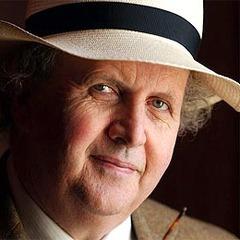
Alexander McCall Smith

Alexander McCall Smith, born on August 24, 1948, is a renowned Scottish writer known for his light-hearted and thoughtful writing style. His most famous works include the 'The No. 1 Ladies' Detective Agency' series, which has gained him a wide readership around the world. more

You May Also Like

“Homer, in the second book of the Iliad says with fine enthusiasm, "Give me masturbation or give me death." Caesar, in his Commentaries, says, "To the lonely it is company; to the forsaken it is a friend; to the aged and to the impotent it is a benefactor. They that are penniless are yet rich, in that they still have this majestic diversion." In another place this experienced observer has said, "There are times when I prefer it to sodomy." Robinson Crusoe says, "I cannot describe what I owe to this gentle art." Queen Elizabeth said, "It is the bulwark of virginity." Cetewayo, the Zulu hero, remarked, "A jerk in the hand is worth two in the bush." The immortal Franklin has said, "Masturbation is the best policy." Michelangelo and all of the other old masters--"old masters," I will remark, is an abbreviation, a contraction--have used similar language. Michelangelo said to Pope Julius II, "Self-negation is noble, self-culture beneficent, self-possession is manly, but to the truly great and inspiring soul they are poor and tame compared with self-abuse." Mr. Brown, here, in one of his latest and most graceful poems, refers to it in an eloquent line which is destined to live to the end of time--"None knows it but to love it; none name it but to praise.”

“And then Robinson Crusoe stripped naked, swam out to his ship, filled his pockets with biscuits, and swam back to shore...." "What?" I said, hefting my pack and frowning at the child. "Nothing," she said, getting to her feet. "Just an old preHegira book that Uncle Martin used to read to me. He used to say that proofreaders have always been incompetent assholes-even 1400 years ago.”

“I had been telling him how the devil was God’s enemy in the hearts of men, and used all his malice and skill to defeat the good designs of Providence, and to ruin the kingdom of Christ in the world, and the like. “Well,” says Friday, “but you say God is so strong, so great; is He not much strong, much might as the devil?” “Yes, yes,” says I, “Friday; God is stronger than the devil—God is above the devil, and therefore we pray to God to tread him down under our feet, and enable us to resist his temptations and quench his fiery darts.” “But,” says he again, “if God much stronger, much might as the wicked devil, why God no kill the devil, so make him no more do wicked?” I was strangely surprised at this question; and, after all, though I was now an old man, yet I was but a young doctor, and ill qualified for a casuist or a solver of difficulties; and at first I could not tell what to say; so I pretended not to hear him, and asked him what he said; but he was too earnest for an answer to forget his question, so that he repeated it in the very same broken words as above. By this time I had recovered myself a little, and I said, “God will at last punish him severely; he is reserved for the judgment, and is to be cast into the bottomless pit, to dwell with everlasting fire.” This did not satisfy Friday; but he returns upon me, repeating my words, “‘Reserve at last!’ me no understand—but why not kill the devil now; not kill great ago?” “You may as well ask me,” said I, “why God does not kill you or me, when we do wicked things here that offend Him—we are preserved to repent and be pardoned.” He mused some time on this. “Well, well,” says he, mighty affectionately, “that well—so you, I, devil, all wicked, all preserve, repent, God pardon all.” Here I was run down again by him to the last degree; and it was a testimony to me, how the mere notions of nature, though they will guide reasonable creatures to the knowledge of a God, and of a worship or homage due to the supreme being of God, as the consequence of our nature, yet nothing but divine revelation can form the knowledge of Jesus Christ, and of redemption purchased for us; of a Mediator of the new covenant, and of an Intercessor at the footstool of God’s throne; I say, nothing but a revelation from Heaven can form these in the soul; and that, therefore, the gospel of our Lord and Saviour Jesus Christ, I mean the Word of God, and the Spirit of God, promised for the guide and sanctifier of His people, are the absolutely necessary instructors of the souls of men in the saving knowledge of God and the means of salvation.”

“In the case of Israel and Palestine, it can feel as though the situation is impossible and that the sides are unequal because Israel has more political power, nuclear weapons, and the support of the United States. You may be deceived by appearance. During the Vietnam War everyone saw that America was the big power and the Vietnamese were a tiny nation without weapons, technology, or the huge amount of money that the Americans had. But the Americans had to withdraw from Vietnam. We should not be too sure.”

“Ontological mathematics is operating in such a way as to organize itself into a zero-entropy structure – mathematical perfection. The “Big Bang” is equivalent to the total scrambling of a cosmic Rubik’s Cube. The task of ontological mathematics is then to unscramble the Cube and return it to its original, pristine configuration. Emotionally, this amounts to returning to perfect Love and Bliss. Intellectually, it means reaching a state of perfect logic and reason … thinking perfectly”