“Cases of typhoid take the following course: When the fever is at its height, life calls out to the patient: calls out to him as he wanders in his distant dream, and summons him in no uncertain voice. The harsh, imperious call reaches the spirit on that remote path that leads into the shadows, the coolness and peace. He hears the call of life, the clear, fresh, mocking summons to return to that distant scene which he had already left so far behind him, and already forgotten. And there may well up in him something like a feeling of same for a neglected duty; a sense of renewed energy, courage, and hope; he may recognize a bond existing still between him and that stirring, colourful, callous existence which he thought he had left so far behind him. Then, how far he may have wandered on his distant path, he will turn back--and live. But if he shudders when he hears life's voice, if the memory of that vanished scene and the sound of that lusty summons make him shake his head, make him put out his hand to ward off as he flies forward in the way of escape that has opened to him--then it is clear that the patient will die. " Buddenbrooks”
Quote by Thomas Mann
Author
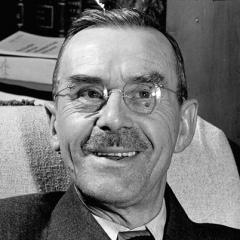
Thomas Mann
Thomas Mann, born on June 6, 1875, and died on August 12, 1955, was a German novelist and one of the greatest writers of the 20th century. Known for his profound psychological portrayals and rich imagination, his works extensively covered themes such as individual and society, history and reality. His masterpieces include 'Buddenbrooks' and 'The Magic Mountain'. more
You May Also Like
Source: Salem Witchcaft; Comprising More Wonders of the Invisible World
Source: The Facts
Source: I Was Told There'd Be Cake: Essays
“Writers are like onions, layers upon layers upon layers.”
Source: The Quiet Kill
Source: Heretics
Source: Dora Bruder
Source: Another Enchanted April
“Nothing good in this world comes free! For everything there’s a payment of time or money or soul!”
Source: The Dressmaker's Secret