Quotessence
Home / Quotes / Quote by Frantz Fanon

Quote by Frantz Fanon

“In this connection, I should like to say something that I have found in many other writers: Intellectual alienation is a creation of middle-class society. What I call middle-class society is any society that becomes rigidified in predetermined forms, forbidding all evolution, all gains, all progress, all discovery. I call middle-class a closed society in which life has no taste, in which the air is tainted, in which ideas and men are corrupt. And I think that a man who takes a stand against this death is in a sense a revolutionary.”

Quote by Frantz Fanon

Work

Black Skin, White Masks

In this seminal work, the author delves into the complexities of racial identity and the psychological effects of being a Black individual in a predominantly white world. The book examines the internalized conflicts and the struggle for self-acceptance that arise from the duality of cultural and racial identities. more

Author
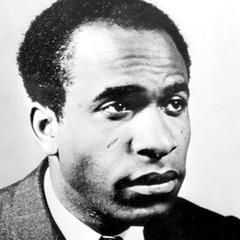
Frantz Fanon
Frantz Fanon

French psychiatrist and influential figure in the decolonization movement. Born in Martinique, Fanon was educated in France and worked as a psychiatrist in Algeria. His works, 'The Wretched of the Earth' and 'The Philosophy of the Revolution', have had a profound impact on postcolonial and liberation theories. more

You May Also Like

“Piri Thomas' book Down These Mean Streets followed me around for years, in the corner of my eye on bus terminal bookracks. Finally, in a gritted teeth desperation I faced the damn thing and said "OK, tell me." I sweated my way through it in two nights: Gang fights, knifings, robberies, smack, prison. It's the standard Puerto Rican street story, except he lived. The junkies could be my younger brothers. The prisoners could be them. I could be the prostitute, the welfare mother, the sister and lover of junkies, the child of alcoholics. There is nothing but circumstance and good English, nothing but my mother marrying into the middle class, between me and that life.”

“He was born in a middle class family with struggles in life. He had adverse surroundings and many difficulties in his life. Some moments haunted him - he would remember a few things that did not happen in his life as he thought they would, and he would feel a deep pain of past regrets shatter his calmness. One day he realized that he desperately needed someone to whom he could share everything and someone who could guide him in life. He found me. And I became his Guru.”

“I have been back among fairy tales,” she says. “I do not quite understand, Alesha. Those gallant little boys! They are youth, and youth is always full of strangeness. Mr. Heritage! He is youth, too, and poetry, perhaps, and a soldier’s tradition. I think I know him... But what about Dickson? He is the petit bourgeois, the épicier, the class which the world ridicules. He is unbelievable. “No,” is the answer. “You will not find him in Russia. He is what they call the middle-class, which we who were foolish used to laugh at. But he is the stuff which aboveall others makes a great people. He will endure when aristocracies crack and proletariats crumble. In our own land we have never known him, but till we create him our land will not be a nation.”

“What the poor as well as the rich require is not to be indoctrinated, is not to be taught other people’s opinions, but to be induced and enabled to think for themselves. It is not physical science that will do this, even if they could learn it much more thoroughly than they are able to do. After reading, writing, and arithmetic (the last a most important discipline in habits of accuracy and precision, in which they are extremely deficient), the desirable thing for them seems to be the most miscellaneous information, and the most varied exercise of their faculties. They cannot read too much. Quantity is of more importance than quality, especially all reading which relates to human life and the ways of mankind; geography, voyages and travels, manners and customs, and romances, which must tend to awaken their imagination and give them some of the meaning of self-devotion and heroism, in short, to unbrutalise them.”

“A society beset by terrifying social problems was threatened by realism... exacerbated by the deep-seated evils of poverty and overcrowding generated by Scotland's pell-mell industrialisation. To expose these would be revolutionary; it would also break the discipline of puritanism by mentioning the unmentionable... The Kirk enforced silence out of conviction, the middle class out of fear. The bogus community of the Kailyard was an alternative to the horror of the real thing.”

“Wilson was the clay-footed prophet of the British-Scots middle class. He created a flatulent rhetoric of national feeling as an antidote to either true national cosciousness or will. He exploited nationalism and religion in order to pursue class politics.”

“The feudal ownership of land did bring dignity, whereas the modern ownership of movables is reducing us again to a nomadic horde. We are reverting to the civilisation of luggage, and historians of the future will note how the middle classes accreted possessions without taking root in the earth, and may find in this the secret of their imaginative poverty. The Schlegels were certainly the poorer for the loss of Wickham Place. It had helped to balance their lives, and almost to counsel them. Nor is their ground-landlord spiritually the richer. He has built flats on its site, his motor-cars grow swifter, his exposures of Socialism more trenchant. But he has spilt the precious distillation of the years, and no chemistry of his can give it back to society again.”