“Fremen possessed a highly evolved conscience which centered on their own welfare as a people. It was only to outsiders that they seemed brutish-just as outsiders appeared brutish to Fremen. Every Fremen knew very well that he could do a brutal thing and feel no guilt. Fremen did not feel guilt for the same things that aroused such feelings in others. Their rituals provided a freedom from guilts which might otherwise have destroyed them. They knew in their deepest awareness that any transgression could be ascribed, at least in part, to well recognized extenuating circumstances: "the failure of authority," or "a natural bad tendency" shared by all humans, or to "bad luck," which any sentient creature should be able to identify as a collision between mortal flesh and the outer chaos of the universe.”
Quote by Frank Herbert
Work
In this sequel to Frank Herbert's 'Dune', the story delves into the political and spiritual struggles of a young woman named Leto II Atreides, who inherits the legacy of her father, Paul Atreides. The novel is set on the desert planet Arrakis, known as Dune, and follows the complex relationships between various factions vying for control over its valuable spice. The narrative encompasses themes of ecological balance, the rise of a new religion, and the manipulation of power dynamics. more
Author
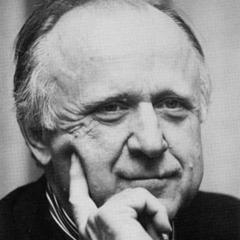
Frank Herbert, born on October 8, 1920, was an influential science fiction author from the United States. His masterpiece 'Dune' is considered a classic in the science fiction genre and has had a profound impact on literature and society. more
You May Also Like
“Art has a way of anticipating future changes in man’s fundamental outlook.”