“The Upanishads have minutely classified every stage of spiritual advancement: - Jivanmukta ("freed while living") - a siddha ("perfected being") has progressed from the state of jivanmukta ("freed while living") to that of: - a paramukta ("supremely free" - full power over death); the latter has completely escaped from the mayic thralldom and its reincarnational round. The paramukta therefore seldom returns to a physical body; if he does return, he is: - an avatar, a divinely appointed medium of supernal blessings on the world. An avatar is unsubject to the universal economy; his pure body, visible as a light image, is free from any debt to Nature. The casual gaze may see nothing extraordinary in an avatar's form; but, on occasion, it casts no shadow nor make any footprint on the ground. These are outward symbolic proofs of an inward freedom from darkness and material bondage. [...] Krishna, Rama, Buddha and Patanjali were among the ancient Indian avatars. [...] Agastya, a South Indian avatar. - Mahavatar (Great Avatar) - Babaji's mission in India has been to assist prophets in carrying out their special dispensations. He thus qualifies for the scriptural classification of Mahavatar (Great Avatar). [...] Babaji is ever in communion with Christ; together they send out vibrations of redemption and have planned the spiritual technique of salvation for this age. The work of these two fully illumined masters is to inspire the nations to forsake wars, race, hatreds, religious sectarianism, and the boomerang evils of materialism.[...] Only one reason motivates Babaji in maintaining his physical form from century to century: the desire to furnish humanity wit ha concrete example of its own possibilities. Were man never vouchsafed a glumpse of Divinity in the flesh, he would remain oppressed by the heavy mayic delusion that he cannot transcend his mortality. - pg305-310, Chapter 33, Babaji, Yogi-Christ of Modern India”
Quote by Paramahansa Yogananda
Work
This book is an autobiographical account of the Indian yogi and guru Paramahansa Yogananda. It describes his early life in India, his spiritual training under his guru Sri Yukteswar, and his eventual journey to the United States to spread the teachings of Kriya Yoga. The narrative includes stories of miraculous events, meetings with various spiritual figures, and insights into the philosophy of yoga and meditation. First published in 1946, it has been widely influential in introducing Eastern spirituality to the Western world. more
Author
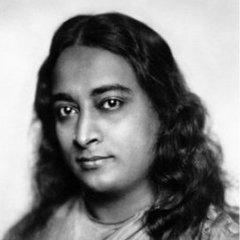
Paramahansa Yogananda was an Indian spiritual teacher born on January 5, 1893, and passed away on March 7, 1952. He is considered one of the key figures in spreading yoga and Indian spiritual philosophy in the Western world, profoundly influencing the understanding of Eastern spiritual traditions in the West. more
You May Also Like
“Every moment has its pleasures and its hope.”