Quotessence
Home / Quotes / Quote by Barbara Oakley

Quote by Barbara Oakley

“A synthesis—an abstraction, chunk, or gist idea—is a neural pattern. Good chunks form neural patterns that resonate, not only within the subject we’re working in, but with other subjects and areas of our lives. The abstraction helps you transfer ideas from one area to another. That’s why great art, poetry, music, and literature can be so compelling. When we grasp the chunk, it takes on a new life in our own minds—we form ideas that enhance and enlighten the neural patterns we already possess, allowing us to more readily see and develop other related patterns. Once we have created a chunk as a neural pattern, we can more easily pass that chunked pattern to others, as Cajal and other great artists, poets, scientists, and writers have done for millennia, Once other people grasp that chunk, not only can they use it, but also they can more easily create similar chunks that apply to other areas in their lives—an important part of the creative process.”

Quote by Barbara Oakley

Work

A Mind for Numbers: How to Excel at Math and Science

Browse quotes and source details for this work. more

Author
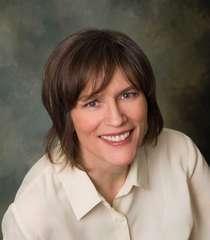
Barbara Oakley
Barbara Oakley

Barbara Oakley is an American professor specializing in engineering and education. She is known for her research in engineering psychology and cognitive load, particularly in the fields of learning science and self-directed learning. Oakley's work has had a wide-reaching impact in both academia and the public. more

You May Also Like

“To deny the truth of our own experience in the scientific study of ourselves is not only unsatisfactory; it is to render the scientific study of ourselves without a subject matter. But to suppose that science cannot contribute to an understanding of our experience may be to abandon, within the modern context, the task of self-understanding. Experience and scientific understanding are like two legs without which we cannot walk. We can phrase this very same idea in positive terms: it is only by having a sense of common ground between cognitive science and human experience that our understanding of cognition can be more complete and reach a satisfying level. We thus propose a constructive task: to enlarge the horizon of cognitive science to include the broader panorama of human, lived experience in a disciplined, transformative analysis.”

“Characteristics of System 1: • generates impressions, feelings, and inclinations; when endorsed by System 2 these become beliefs, attitudes, and intentions • operates automatically and quickly, with little or no effort, and no sense of voluntary control • can be programmed by System 2 to mobilize attention when a particular pattern is detected (search) • executes skilled responses and generates skilled intuitions, after adequate training • creates a coherent pattern of activated ideas in associative memory • links a sense of cognitive ease to illusions of truth, pleasant feelings, and reduced vigilance • distinguishes the surprising from the normal • infers and invents causes and intentions • neglects ambiguity and suppresses doubt • is biased to believe and confirm • exaggerates emotional consistency (halo effect) • focuses on existing evidence and ignores absent evidence (WYSIATI) • generates a limited set of basic assessments • represents sets by norms and prototypes, does not integrate • matches intensities across scales (e.g., size to loudness) • computes more than intended (mental shotgun) • sometimes substitutes an easier question for a difficult one (heuristics) • is more sensitive to changes than to states (prospect theory)* • overweights low probabilities* • shows diminishing sensitivity to quantity (psychophysics)* • responds more strongly to losses than to gains (loss aversion)* • frames decision problems narrowly, in isolation from one another*”

“A serious appreciation of cognitive science requires us to rethink philosophy from the beginning, in a way that would put it more in touch with the reality of how we think. ... Unless we know our cognitive unconscious fully and intimately, we can neither know ourselves nor truly understand the basis of our moral judgments, our conscious deliberations, and our philosophy.”

“In most sciences, there are few findings more prized than a counterintuitive result. It shows something surprising and forces us to reconsider our often tacit assumptions. In philosophy of mind, a counterintuitive “result” (e.g., a mind-boggling implication of somebody’s “theory” of perception, memory, consciousness, or whatever) is typically taken as tantamount to a refutation. This affection for one’s current intuitions, sometimes amounting (as we saw in the previous chapter) to a refusal even to consider alternative perspectives, installs deep conservatism in the methods of philosophers. Conservatism can be a good thing, but only if it is acknowledged. By all means, let’s not abandon perfectly good and familiar intuitions without a fight, but let’s recognize that the intuitions that are initially used to frame the issues may not live to settle the issues.”

“...[T]he whole undertaking of philosophical inquiry requires a prior understanding of the conceptual system in which the undertaking is set. That is an empirical job for cognitive science and cognitive semantics. ... Unless this job is done, we will not know whether the answers philosophers give to their questions are a function of the conceptualization built into the questions themselves.”

“If you are one of those people who can’t hold a lot in mind at once—you lose focus and start daydreaming in lectures, and have to get to someplace quiet to focus so you can use your working memory to its maximum—well, welcome to the clan of the creative. Having a somewhat smaller working memory means you can more easily generalize your learning into new, more creative combinations. Because your learning new, more creative combinations. Having a somewhat smaller working memory, which grows from the focusing abilities of the prefrontal cortex, doesn’t lock everything up so tightly, you can more easily get input from other parts of your brain. These other areas, which include the sensory cortex, not only are more in tune with what’s going on in the environment, but also are the source of dreams, not to mention creative ideas. You may have to work harder sometimes (or even much of the time) to understand what’s going on, but once you’ve got something chunked, you can take that chunk and turn it outside in and inside round—putting it through creative paces even you didn’t think you were capable of! Here’s another point to put into your mental chunker: Chess, that bastion of intellectuals, has some elite players with roughly average IQs. These seemingly middling intellects are able to do better than some more intelligent players because they practice more. That’s the key idea. Every chess player, whether average or elite, grows talent by practicing. It is the practice—particularly deliberate practice on the toughest aspects of the material—that can help lift average brains into the realm of those with more “natural” gifts. Just as you can practice lifting weights and get bigger muscles over time, you can also practice certain mental patterns that deepen and enlarge in your mind.”

“In a country where those who are committing crime are supported, rewarded, applauded and promoted. In a country where no one is arrested for doing wrong or for breaking the law. No one is taking responsibility and accountability. It will make everyone in that country to voluntarily participate in committing crime. Everyone will eventually end up being corrupt or criminals including foreigners. It will be a competition or a dare for thieves on who steals more and who steals better. People everyday will ask themselves why should they bother being good and not committing a crime, when everyone is doing it. Crime stats will be so high and increasing everyday. It is a duty of the president and the cabinet ministers in making sure the law is followed .If not everyone in that country will commit crime and they will be ok with it. No one will see anything wrong. That includes the law enforcement or institution.”