Quotessence
Home / Quotes / Quote by Agatha Christie

Quote by Agatha Christie

“George listened to the radio and wondered whether that dear child Nancy would allow him to give her a fur coat. She was very proud, he knew. He didn't want to offend her. Still, she had complained of the cold. That tweed coat of hers was a cheap affair; it didn't keep the cold out. He could put it so that she wouldn't mind, perhaps... They must have another evening out soon. It was a pleasure to take a girl like that to a smart restaurant. He could see several young fellows were envying him. She was uncommonly pretty. And she liked him. To her, as she had told him, he didn't seem a bit old. He looked up and caught his wife's eye. He felt suddenly guilty, which annoyed him. What a narrow-minded, suspicious woman Maria was! She grudged him any little bit of happiness. He switched off the radio and went to bed.”

Quote by Agatha Christie

Work

The Case of the Middle-Aged Wife - a Parker Pyne Short Story

Browse quotes and source details for this work. more

Author
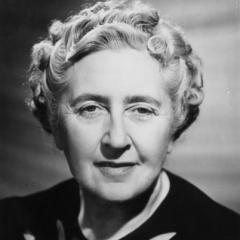
Agatha Christie
Agatha Christie

Agatha Christie, a renowned British detective novel writer, is known as the Queen of Detective Fiction. She was born on September 15, 1890, and passed away on January 12, 1976. Christie's works are characterized by intricate plots, unique reasoning, and vivid characters, and have had a profound impact on detective fiction worldwide. more

You May Also Like

“two over-lapping circles, with a certain strong riveted centre of common ground, but both with separate arcs jutting out in the world. A balanced tension, adaptable to circumstances, in which there is an elasticity of pull, tension, yet firm unity . . . . I do not believe . . . that artistic creativity can best be indulged in masterful singleness rather than in marital cooperation. I think that a workable union should heighten the potentialities in both individuals.”

“In much of our thinking, singleness, if not downright bad, is certainly not seen as good. One writer has noticed the difference between Christian books on marriage and those on singleness. In the books on marriage, marriage is assumed to be a great thing and all that remains is to understand it better, and perhaps be aware of one or two potential pitfalls that might arise. But books on singleness typically have a different starting point. Singleness is assumed to be pretty much awful. The point of the books is, therefore, to see if we might to eke out something just about tolerable from it. Even the way we describe singleness reflects this. It is almost always defined in the negative, as the absence of something. It is the state of not being married. It is the absence of significant other. This defining by negation reinforces the idea that there is nothing intrinsically good about singleness. It is merely the situation of lacking what is intrinsically good in marriage.”

“You might be tempted to conclude: “Well, how about we live together, instead of getting married? We will try each other out. It is the sensible thing to do.” But what exactly does it mean, when you invite someone to live with you, instead of committing yourself to each other? And let us be appropriately harsh and realistic about our appraisal, instead of pretending we are taking a used car for a test jaunt. Here is what it means: “You will do, for now, and I presume you feel the same way about me. Otherwise we would just get married. But in the name of a common sense that neither of us possesses, we are going to reserve the right to swap each other out for a better option at any point.” And if you do not think that is what living together means—as a fully articulated ethical statement—see if you can formulate something more plausible. You might think, “Look, Doc, that is pretty cynical.” So why not we consider the stats, instead of the opinion of arguably but not truly old-fashioned me? The breakup rate among people who are not married but are living together—so, married in everything but the formal sense—is substantially higher than the divorce rate among married couples. And even if you do get married and make an honest person, so to speak, of the individual with whom you cohabited, you are still much more rather than less likely to get divorced than you would be had you never lived together initially. So the idea of trying each other out? Sounds enticing, but does not work.”

“Would you still love your lady friend if you couldn’t marry her?” “You mean my fiancée?” He flaps a hand without turning, like the word itself reeks of matrimony. “Yes, but I’m glad I get to. Even if it weren’t before king and country, I’d marry her. Maybe it’s all symbolic, but I want her to know that we’re truly partners now. And for the rest of our lives.”