Quotessence
Home / Quotes / Quote by Jean Vanier

Quote by Jean Vanier

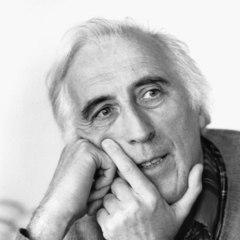
“But how to be present to another? Our hearts are so hard. We are so insensitive to the suffering of others. We must pray the Holy Spirit to change our hearts of stone into hearts of flesh so that we may give life, for love is giving of life and liberty. By our confidence in another we can bring forth new aspirations and a taste for life in him. We can help the miserable person to live, to progress and to grow. And he will only begin to want to live when he has been told by our gestures, words, the tone of our voice, our look, our whole being that it is important that he live.”

Quote by Jean Vanier

Work

Eruption to Hope

Browse quotes and source details for this work. more

Author

Jean Vanier
Jean Vanier

Jean Vanier is a philosopher known for his care for individuals with autism and his advocacy for community living. Born on September 10, 1928, he has made significant contributions to the well-being of people with autism through his work with L'Arche, a community that provides support and housing for them. more

You May Also Like

“Since we are not yet fully comfortable with the idea that people from the next village are as human as ourselves, it is presumptuous in the extreme to suppose we could ever look at sociable, tool-making creatures who arose from other evolutionary paths and see not beasts but brothers, not rivals by fellow pilgrims journeying to the shrine of intelligence. Yet that is what I see, or yearn to see. The difference between raman and varelse is not in the creature judged but in the creature judging, and when we declare an alien species to be raman, it does not mean that they have passed a threshold of moral maturity. It means that we have.”

“❝ Outside and inside form a dialectic of division, the obvious geometry of which blinds us as soon as we bring it into play in metaphorical domains. It has the sharpness of the dialectics of ‘yes’ and 'no,’ which decides everything. Unless one is careful, it is made into a basis of images that govern all thoughts of positive and negative. Logicians draw circles that overlap or exclude each other, and all their rules immediately become clear. Philosophers, when confronted with outside and inside, think in terms of being and non-being. Thus profound metaphysics is rooted in an implitcit geometry which– whether we will or no–confers spatiality upon thought; if a metaphysician could not draw, what would he think? Open and closed, for him, are thoughts. They are metaphors that he attaches to everything, even his systems. In a lecture given by Jean Hyppolite on the subtle structure of denegation (which is quite different from the simple structure of negation) Hyppolite spoke of “a first myth of outside and inside.” And he added: “you feel the full significance of this myth of outside and inside in alienation, which is founded on these two term. Beyond what is expressed in their formal opposition lie alienation and hostility between the two.” And so, simple geometrical opposition becomes tinged with agressivity. Formal opposition is incapable of remaining calm.”

“Ek het al dikwels gesien hoe mense wat ons Echo-gemeenskap besoek, aanvanklik heel beïndruk is, maar gou ’n mate van ontnugtering beleef as hulle ons eers beter leer ken. Daar is dalk liefde en selfopoffering, maar daar is ook baie chaos en konflik. Ek wonder soms, wat het hulle verwag, St Franciscus se happy band of brothers? I wish!”