“Eighty-five years after the storms of steel of the German-French fronts, sixty-five years after the peak of the Stalinist mass exterminations, fifty-five years after the liberation of Auschwitz, and just as long after the bombardments of Dresden, Hiroshima, and Nagasaki, the swinging back of the Zeitgeist to the preference for middling circumstances is to be understood as a tribute to normalization. In this regard, it has an unconditionally affirmative civilizing value. Furthermore, democracy per se presupposes the cultivation of middling circumstances. As is well known, spirit spits what is lukewarm out of its mouth; in contrast, pragmatism holds that the temperature of life is lukewarm. Thus the impulse toward the middle, the cardinal symptom of the fin de siècle, does not have only political motives. It symbolizes the weariness of apocalypse felt by a society that has had to hear too much of revolutions and paradigm shifts. But above all it expresses the general pull toward the conversion of the drama of history into the insurance industry. Insurance policies anchor antiextremism in the routines of the post-radical society. The insurance industry is humanism minus book culture. It brings into shape the insight that human beings as a rule do not wish to be revolutionized, but rather to be safeguarded. Whoever understands this will bank on the fact that in the future contra-innovative revolts from out of the spirit of the insurance claim are most probable of all.”
Quote by Peter Sloterdijk
Work
Not Saved: Essays After Heidegger
Browse quotes and source details for this work. more
Author
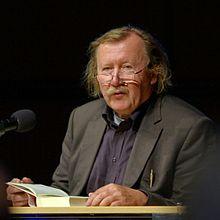
Peter Sloterdijk
Peter Sloterdijk is a German philosopher born on June 26, 1947. Known for his unique philosophical thoughts and profound insights into social culture, his works cover a wide range of fields including ethics, aesthetics, and sociology, making a significant impact on the contemporary philosophical world. more
You May Also Like
Source: Sending Signals: Amplify the Reach, Resonance and Results of Your Ideas
“The best ideas weave in the logical as well as the emotional. Touch the head as well as the heart.”
Source: Sending Signals: Amplify the Reach, Resonance and Results of Your Ideas
Source: Requiem for a Dream
Source: Sending Signals: Amplify the Reach, Resonance and Results of Your Ideas
Source: Sending Signals: Amplify the Reach, Resonance and Results of Your Ideas
Source: Sending Signals: Amplify the Reach, Resonance and Results of Your Ideas
Source: Sending Signals: Amplify the Reach, Resonance and Results of Your Ideas