Quotessence
Home / Quotes / Quote by Nigel Slater

Quote by Nigel Slater

“A cardamom bun is less sticky than the cinnamon-scented kanelbullar; more giving than the currant-freckled curls of the Chelsea bun, but just as much fun to unravel as you sip your coffee. You can spend a pleasing afternoon making a batch of buns. The milk-enriched dough is spread with ground spice, sugar and butter, sliced into wide ribbons then fashioned into an untidy knot. Each cook seems to have their signature tangle. The surface is speckled black and white, a gritty mix of caster sugar and ground cardamom. The salt and pepper of Swedish baking and my drug of choice.”

Quote by Nigel Slater

Work

A Thousand Feasts: Small Moments of Joy… A Memoir of Sorts

Browse quotes and source details for this work. more

Author
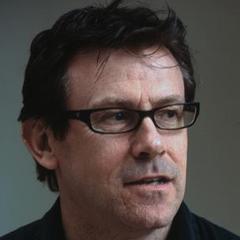
Nigel Slater
Nigel Slater

Nigel Slater is a distinguished British writer known for his culinary expertise and literary contributions. Born on April 9, 1958, Slater has made substantial contributions to the field of gastronomy through his cookbooks, columns, and television appearances. His work often centers on the joy of cooking and the significance of food in daily life. more

You May Also Like

“Just shut up.” But he doesn’t. “I’m not saying you should do anything. And that’s why I stepped in and didn’t let you bring her home.” His tone turns serious. “All kidding aside, Pike,” he goes on, “she is exactly your type. You shouldn’t be alone with her.” Yeah. I know. I just hope he’s the only person who’s noticed. “Thanks for the intervention,” I tell him, “but even if I were attracted to her, I’m capable of controlling myself.” “You’re not seeing yourself from my perspective.” He looks out the front windshield, solemn. “You look at each other like…” “Like?” He swallows, an unusually troubled pinch to his brow. “Like the two of you have your own language.”

“A naked woman sat sunning herself on a nearby rock like a mermaid. Beads of water sparkled like diamonds on her slicked-back hair and bronze skin. A row of pearls appeared when she grinned. Brigid briefly wondered if women like this were the inspiration of seafaring folks' legends. "Harriet?" Brigid asked, though she recognized the woman immediately. There was no one on the Island--- no one anywhere--- who looked anything like her. "I like to swim in the buff. Hope you don't mind." "Not at all," Brigid said. Harriet's nudity seemed so natural that Brigid had barely taken note. She looked back out at the sound. "I saw a whale out there a few nights ago." "I saw one this morning," Harriet told her. "She's a friend of mine. I've known her for years." Brigid stared off across the endless expanse and imagined the whale out there, keeping watch beneath the waves.”

“But, you will say, what a dreadful person you are, with your impossible religious notions and idiotic scruples. If my ideas are impossible or idiotic then I would like nothing better than to be rid of them. But this is roughly the way I actually see things. In Le philosophe sous les toits by Souvestre you can read what a man of the people, a simple craftsman, pitiful if you will, thinks of his country: ‘Tu n’as peut-être jamais pensé á ce que c’est la patrie, reprit-il, en me posant une main sur l’épaule; c’est tout ce qui t’entoure, tout ce qui t’a élevé et nourri, tout ce que tu as aimé. Cette campagne que tu vois, ces maisons, ces arbres, ces jeunes filles qui passent lá en riant, c’est la patrie! Les lois qui te protégent, le pain qui paye ton travail, les paroles que tu échanges, la joie et la tristesse qui te viennent des hommes et des choses parmi lesquels tu vis, c’est la patrie! La petite chambre oú tu as autrefois vu ta mere, les souvenirs qu’elle t’a laisses, la terre oú elle repose, c’est la patrie! Tu la vois, tu la respires partout! Figure toi, tes droits et tes devoirs, tes affections et tes besoins, tes souvenirs et ta reconnaissance, réunis tout ça sous un seul nom et ce nom sera la patrie.”

“Nul ne peut imaginer le nombre de fois où il faut déclarer être veuf une fois que l'on est veuf, pour régler le juste-après, pour légaliser l'encore-après, pour justifier le maintenant, alors qu'il n'existe aucune case à cocher pour dire que l'on a perdu un enfant. On peut être parricide, infanticide, on peut être orphelin de père ou de mère, mais il n'existe même pas de mot pour nommer ce que tu es précisément. Orphelin de ton fils.”