Quotessence
Home / Quotes / Quote by Ray Bradbury

Quote by Ray Bradbury

“Иногда я подслушиваю разговоры в метро. Или у фонтанчиков с содовой водой. И знаете что? — Что? — Люди ни о чём не говорят. — Ну как это может быть! — Да-да. Ни о чём.Сыплют названиями — марки автомобилей, моды, плавательные бассейны и ко всему прибавляют: «Как шикарно!» Все они твердят одно и то же. Как трещотки.”

Quote by Ray Bradbury

Work

Fahrenheit 451

Ray Bradbury's Fahrenheit 451 is a thought-provoking novel set in a future society where books are banned and firemen are employed to burn any that are found. The story follows a fireman named Guy Montag who begins to question the status quo and the role of literature in society. more

Author

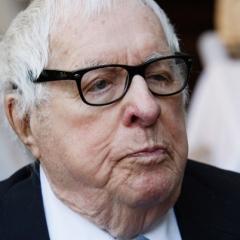
Ray Bradbury
Ray Bradbury

Ray Bradbury, born on August 22, 1920, and died on June 5, 2012, was an influential American science fiction writer, playwright, and poet. His works are known for their unique imagination and profound philosophical insights, which have had a profound impact on the science fiction genre. more

You May Also Like

“Usually adult males who are unable to make emotional connections with the women they choose to be intimate with are frozen in time, unable to allow themselves to love for fear that the loved one will abandon them. If the first woman they passionately loved, the mother, was not true to her bond of love, then how can they trust that their partner will be true to love. Often in their adult relationships these men act out again and again to test their partner's love. While the rejected adolescent boy imagines that he can no longer receive his mother's love because he is not worthy, as a grown man he may act out in ways that are unworthy and yet demand of the woman in his life that she offer him unconditional love. This testing does not heal the wound of the past, it merely reenacts it, for ultimately the woman will become weary of being tested and end the relationship, thus reenacting the abandonment. This drama confirms for many men that they cannot put their trust in love. They decide that it is better to put their faith in being powerful, in being dominant.”

“Zoltán looked at them through the window. He hated the man. Now he hated work. Work for these? Work with these? He saw before him the great puszta. Here the long, cracked stripe of a ditch once again stole the blue of the sky, transforming it into a deeper colour, renewing it, like an artist's palette: every pool on the meadows, every clump of flowers, was a jewel on the bosom of nature, a diadem, a string of pearls: oh, nature was lovely... That is, it would be if it could... But mankind... Among these? Struggle, fight, this greedy little piece of meat... Dark furrows on the wondrous surface, the many-branched, tufted promise of the maize, jewelled patches on God's regal robe: why was the world so lovely? to cover up the ugliness of man?”

“[Darwin] gave an answer to the tremendous question that so deeply concerns...What is Man? [He] answered this question to the effect that man is a natural product of the universe;...man is an animal, a vertebrate, a mammal, and a primate....By bringing man into the evolutionary picture, Darwin finally took the last step in our emancipation and finally made our world rational. [Yet] Darwin felt humility and awe that seem to me truly religious. ["Darwin led us into this modern world," 1959, p. 271-272.]”