Quotessence
Home / Quotes / Quote by Edith Wharton

Quote by Edith Wharton

“She had in truth no abstract propensity to malice: she did not dislike Lily because the latter was brilliant and predominant, but because she thought that Lily disliked her. It is less mortifying to believe one's self unpopular than insignificant, and vanity prefers to assume that indifference is a latent form of unfriendliness.”

Quote by Edith Wharton

Work

The House of Mirth

Edith Wharton's classic novel delves into the complexities of high society, following the life of Lily Bart, a young woman who navigates the intricate web of relationships and expectations in the Gilded Age. The story is rich in detail, offering a critical examination of the era's values and the limitations placed on women. more

Author

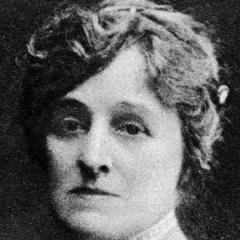
Edith Wharton
Edith Wharton

American novelist known for her delicate psychological portrayals and profound social insights. Edith Wharton came from a wealthy New York family and her works mainly reflect the American society at the end of the 19th century and the beginning of the 20th century. Her representative works include 'The Age of Innocence' and 'The House of Mirth' among others. more

You May Also Like

“Elizabeth had never been more at a loss to make her feelings appear what they were not. It was necessary to laugh, when she would rather have cried. Her father had most cruelly mortified her, by what he said of Mr. Darcy's indifference, and she could do nothing but wonder at such a want of penetration, or fear that perhaps, instead of his seeing too little, she might have fancied too much.”

“Count Ayakura’s abstraction persisted. He believed that only a vulgar mentality was willing to acknowledge the possibility of catastrophe. He felt that taking naps was much more beneficial than confronting catastrophes. However precipitous the future might seem, he learned from the game of kemari that the ball must always come down. There was no call for consternation. Grief and rage, along with other outbursts of passion, were mistakes easily committed by a mind lacking in refinement. And the Count was certainly not a man who lacked refinement. Just let matters slide. How much better to accept each sweet drop of the honey that was Time, than to stoop to the vulgarity latent in every decision. However grave the matter at hand might be, if one neglected it for long enough, the act of neglect itself would begin to affect the situation, and someone else would emerge as an ally. Such was Count Ayakura’s version of political theory.”

“Since the basic cause of man’s anxiety is the possibility of being either a saint or a sinner, it follows that there are only two alternatives for him. Man can either mount upward to the peak of eternity or else slip backwards to the chasms of despair and frustration. Yet there are many who think there is yet another alternative, namely, that of indifference. They think that, just as bears hibernate for a season in a state of suspended animation, so they, too, can sleep through life without choosing to live for God or against Him. But hibernation is no escape; winter ends, and one is then forced to make a decision—indeed, the very choice of indifference is itself a decision. White fences do not remain white fences by having nothing done to them; they soon become black fences. Since there is a tendency in us that pulls us back to the animal, the mere fact that we do not resist it operates to our own destruction. Just as life is the sum of forces that resist death, so, too, man’s will must be the sum of the forces that resist frustration. A man who has taken poison into his system can ignore the antidote, or he can throw it out the window; it makes no difference which he does, for death is already on the march. St. Paul warns us, “How shall we escape it we neglect so great a salvation” (Heb 2:3). By the mere fact that we do not go forward, we go backward. There are no plains in the spiritual life, we are either going uphill or coming down. Furthermore the pose of indifference is only intellectual. The will must choose. And even though an “indifferent” soul does not positively reject the infinite, the infinite rejects it. The talents that are unused are taken away, and the Scriptures tell us that, “But because though art lukewarm, and neither cold nor hot, I will begin to vomit thee out of my mouth” (Rev. 3:16).”

“A questão é: você já reparou como nós esmagamos uma barata numa boa e não sentimos remorso nenhum, apesar de estarmos na realidade exterminando uma vida? Pois é. Fazemos isso porque não nos identificamos com a barata. Porque ela é muito diferente de nós. [...] Pensando por esse lado, acho que algumas pessoas às vezes tendem a fazer do mesmo jeito com relação a outras. Ou seja, elas veem com distanciamento aqueles com quem não se identificam logo de cara, entende? É como se o estranho, que não faz parte do mesmo grupo que nós, fosse visto como um ser inferior... Quase uma barata!”