“Why do we focus on certain things at the expense of others? We will risk our lives to save a person from drowning, yet not make a donation that could save dozens of children from starvation. We install solar panels when their impact on CO2 emissions is minimal - and indeed may have a net negative effect if manufacturing and installation are taken into account - rather than contributing to more efficient infrastructure projects. I consider my own decision-making in these areas to be more rational than that of most people but I also make errors of the same kind. We are genetically programmed to react to stimuli in our immediate vicinity. Responding to complex issues that we can not perceive directly requires the application of reasoning, which is less powerful than instinct.”
Quote by Graeme Simsion
Book:The Rosie Project
Work
The Rosie Project
Browse quotes and source details for this work. more
Author
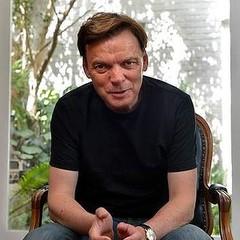
Graeme Simsion
Graeme Simsion is an Australian author known for his unique sense of humor and profound insights into human relationships and modern life complexities. more
You May Also Like
“The day we run out of questions, will be the day we run out of life.”
Source: Aşkanjali: The Sufi Sermon
“Holiness that starts and ends in books, is no holiness.”
Source: Aşkanjali: The Sufi Sermon
“If arguments could convince humans, there would be no arguments at all.”
Source: Why I Am a Muslim: And a Christian and a Jew
Source: Pallieter
Source: Circe
Source: How Charts Lie: Getting Smarter about Visual Information
Source: How Charts Lie: Getting Smarter about Visual Information
Source: Enlightenment Now: The Case for Reason, Science, Humanism, and Progress
Source: Reading for Survival
Source: Life's Impressions