Quotessence
Home / Quotes / Quote by Arthur C. Clarke

Quote by Arthur C. Clarke

“Since the first satellites had been orbited, almost fifty years earlier, trillions and quadrillions of pulses of information had been pouring down from space, to be stored against the day when they might contribute to the advance of knowledge. Only a minute fraction of all this raw material would ever be processed; but there was no way of telling what observation some scientist might wish to consult, ten, or fifty, or a hundred years from now. So everything had to be kept on file, stacked in endless airconditioned galleries, triplicated at the [data] centers against the possibility of accidental loss. It was part of the real treasure of mankind, more valuable than all the gold locked uselessly away in bank vaults.”

Quote by Arthur C. Clarke

Author
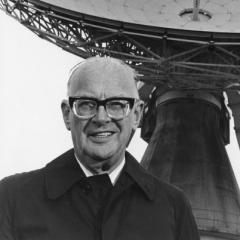
Arthur C. Clarke
Arthur C. Clarke

Arthur C. Clarke was a British science fiction author, writer, and science popularizer. Known for his science fiction novels and predictions about future technology, his most famous works include '2001: A Space Odyssey' and 'Rendezvous with Rama'. Clarke's science fiction novels are not only literarily valuable but also had a profound impact on science fiction films and television. more

You May Also Like

“Some historians, by prioritising accuracy of information and parading their attentiveness, diligence, and industry, emphasised only the objective of factual knowledge which might prove detrimental to their scholarly creativity, empathy, and synthetic power as well as their aesthetic judgement and broader understanding. R. E. Stansfield-Cudworth, ‘Archivists and Historians: Perspectives on the Place of Historical Research in Archival Practice’ (2015), p. 16.”

“The tide of nineteenth-century whig orthodoxy – with its unequal emphasis on constitutional history – subsided, in the mid-twentieth century, to reveal new approaches to History. In the Stubbsian realm of later-medieval political history, for instance, this tide’s retreat enabled the advance of waters which emphasised personalities and the importance of political connections and patronage networks. R. E. Stansfield-Cudworth, ‘Archivists and Historians: Perspectives on the Place of Historical Research in Archival Practice’ (2015), pp. 18–19.”

“The sphere of ‘historical research’ does not readily or exactly correspond with that of ‘archival practice’ but the notion that even if a single component of the latter is omitted from the former that that then validates the profession’s collective defenestration of all issues historical fails to appreciate the complexity of all arguments. R. E. Stansfield-Cudworth, ‘Archivists and Historians: Perspectives on the Place of Historical Research in Archival Practice’ (2015), p. 41.”

“A view of archivists as historians’ handmaidens accepts subservience, infers disciplinary subordination, and implies professional inferiority, which does not realise the scale and extent of archivists’ true accumulated expertise. Consequently, if we invert the proposition to pose not whether historians make better archivists but whether archivists make better historians, it is possible to consider not whether archivists should be scholars and engage in historical research but whether the realm of historical scholarship should incorporate archivists and archival activities. R. E. Stansfield-Cudworth, ‘Archivists and Historians: Perspectives on the Place of Historical Research in Archival Practice’ (2015), p. 46.”