Quotessence
Home / Quotes / Quote by Euripides

Quote by Euripides

“MEDEA: The gods know who was the author of this sorrow. JASON: Yes, the gods know indeed, they know your loathsome heart. MEDEA: Hate me. But I tire of your barking bitterness.”
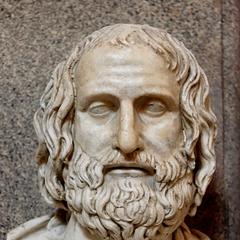
Quote by Euripides

Book:Medea

Work

Medea

This book is a renowned work of Greek literature, exploring themes of revenge and betrayal through the character of Medea. more

Author

Euripides
Euripides

Euripides, a renowned Greek tragic playwright, is one of the three great tragic poets of ancient Greece, alongside Aeschylus and Sophocles. His life and achievements are not well-documented. more

You May Also Like

“Soon he was online every night until one or two a.m. Often he would wake up at three of four a.m. and go back online. He would shut down the computer screen when I walked in. In the past, he used to take the laptop to bed with him and we would both be on our laptops, hips touching. He stopped doing that, slipping off to his office instead and closing the door even when A was asleep. He started closing doors behind him. I was steeped in denial, but my body knew.”

“The bourgeois sees in his wife a mere instrument of production. He hears that the instruments of production are to be exploited in common, and, naturally, can come to no other conclusion than that the lot of being common to all will likewise fall to the women. He has not even a suspicion that the real point is to do away with the status of women as mere instruments of production. For the rest, nothing is more ridiculous than the virtuous indignation of our bourgeois at the community of women which, they pretend, is to be openly and officially established by the Communists. The Communists have no need to introduce the community of women; it has existed almost from time immemorial. Our bourgeois, not content with having the wives and daughters of their proletarians at their disposal, not to speak of common prostitutes, take the greatest pleasure in seducing each other's wives. Bourgeois marriage is in reality a system of wives in common and thus, at the most, what the Communists might possibly be reproached with, is that they desire to introduce, in substitution for a hypocritically concealed, an openly legalised community of women. For the rest, it is self-evident that the abolition of the present system of production must bring with it the abolition of the community of women springing from that system, i.e., of prostitution both public and private.”

“Annabelle, what happened to you?” Lillian asked the next morning. “You look dreadful. Why aren’t you wearing your riding habit? I thought you were going to try out the jumping course this morning. And why did you disappear so suddenly last night? It’s not like you to simply vanish without saying—” “I didn’t have a choice in the matter,” Annabelle said testily, folding her fingers around the delicate bowl of a porcelain teacup. Looking pale and exhausted, her blue eyes ringed with dark shadows, she swallowed a mouthful of heavily sweetened tea before continuing. “It was that blasted perfume of yours—as soon as he caught one whiff of it, he went berserk.” Shocked, Lillian tried to take in the information, her stomach plummeting. “It… it had an effect on Westcliff, then?” she managed to ask. “Good Lord, not Lord Westcliff.” Annabelle rubbed her weary eyes. “He couldn’t have cared less what I smelled like. It was my husband who went completely mad. After he caught the scent of that stuff, he dragged me up to our room and…well, suffice it to say, Mr. Hunt kept me awake all night. All night ,” she repeated in sullen emphasis, and drank deeply of the tea. “Doing what?” Daisy asked blankly. Lillian, who was feeling a rush of relief that Lord Westcliff had not been attracted to Annabelle while she was wearing the perfume, gave her younger sister a derisive glance. “What do you think they were doing? Playing a few hands of Find-the-Lady?”