Quotessence
Home / Quotes / Quote by Siddhartha Mukherjee

Quote by Siddhartha Mukherjee

“When a disease insinuates itself so potently into the imagination of an era, it is often because it impinges on an anxiety latent within that imagination. AIDS loomed so large on the 1980s in part because this was a generation inherently haunted by its sexuality and freedom; SARS set off a panic about global spread and contagion at a time when globalism and social contagion were issues simmering nervously in the West. Every era casts illness in its own image. Society, like the ultimate psychosomatic patient, matches its medical afflictions to its psychological crises; when a disease touches such a visceral chord, it is often because that chord is already resonating.”

Quote by Siddhartha Mukherjee

Work

The Emperor of All Maladies: A Biography of Cancer

This comprehensive biography delves into the origins, development, and treatment of cancer, offering a historical and scientific perspective on one of the most significant health challenges of our time. more

Author
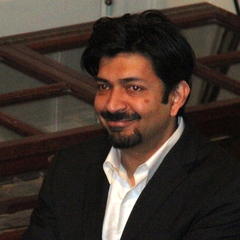
Siddhartha Mukherjee

Siddhartha Mukherjee is a distinguished physician and oncologist, born in 1970. He has made substantial contributions to cancer research and has been recognized with numerous awards, including the Pulitzer Prize for General Non-Fiction for his book 'The Emperor of All Maladies: A Biography of Cancer'. more

You May Also Like

“I believe that it is the task of social science to produce nuanced and people-centered forms of knowledge, correcting asymmetries of information and helping to promote, to the best of our ability, informed consent, human protection, and safety in medical and research settings.”

“When people ask me to pray for them or their loved ones, I explain that I’d be happy to hold HeartLight—sacred space—for them. The visualization I use is a sugar snap pea. In my mind’s eye, I unzip the pod, scoop out the peas, and place the person inside. Carefully, I rezip the pod and envision it as a ‘station,’ somewhat like an incubator, of vivid green, pulsing with vital energy that’s working for the person’s highest and best good—body, mind, and spirit.”

“He felt as he always did when he finished a book—queerly empty, let down, aware that for each little success he had paid a toll of absurdity. It was always the same, always the same—like toiling uphill through jungle and breaking out to a clearing at the top after months of hell only to discover nothing more rewarding than a view of a freeway—with a few gas stations and bowling alleys thrown in for good behavior, or something.”

“When scientists underestimate complexity, they fall prey to the perils of unintended consequences. The parables of such scientific overreach are well-known: foreign animals, introduced to control pests, become pests in their own right; the raising of smokestacks, meant to alleviate urban pollution, releases particulate effluents higher in the air and exacerbates pollution; stimulating blood formation, meant to prevent heart attacks, thickens the blood and results in an increased risk of blood clots in the heart. But when nonscientists overestimate [italicized, sic] complexity- 'No one can possibly crack this [italicized, sic] code" - they fall into the trap of unanticipated consequences. In the early 1950s , a common trope among some biologists was that the genetic code would be so context dependent- so utterly determined by a particular cell in a particular organism and so horribly convoluted- that deciphering it would be impossible. The truth turned out to be quite the opposite: just one molecule carries the code, and just one code pervades the biological world. If we know the code, we can intentionally alter it in organisms, and ultimately in humans. Similarly, in the 1960s, many doubted that gene-cloning technologies could so easily shuttle genes between species. by 1980, making a mammalian protein in a bacterial cell, or a bacterial protein in a mammalian cell, was not just feasible, it was in Berg's words, rather "ridiculously simple." Species were specious. "Being natural" was often "just a pose.”

“Obesity is not a disease. It is a lifestyle affliction. It is a symptom. It is a side-effect of poor habits and it can be reversed.”