Quotessence
Home / Quotes / Quote by Jean Baudrillard

Quote by Jean Baudrillard

“The conscious decision to make a movement corresponds to an electrical event in the brain that happens 200 to 300 milliseconds after the beginning of the movement.' 'The experience of free determination of the will is nothing but an awareness of past events projected into the future' (Atlan). This precession of the act over the will, of the movement over the decision is interesting. It is the very question of thought: is there, in thought itself, something that precedes thought? More broadly, it is the question of the world: is there, before the Big Bang, something that precedes the world? This enquiry is essentially metaphysical. No point falling back on 'neuronal electricity'!”

Quote by Jean Baudrillard

Work

Cool Memories V: 2000 - 2004

Browse quotes and source details for this work. more

Author
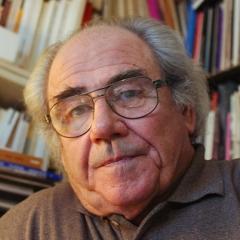
Jean Baudrillard
Jean Baudrillard

Jean Baudrillard was a French philosopher known for his critical studies on consumerism, media, and semiotics. His theories have had a profound impact on postmodernism and cultural studies. more

You May Also Like

“Molto spesso l’attività intellettuale della donna si manifesta in un rimuginare il passato chiedendosi che cosa nella propria o nell'altrui esistenza avrebbe dovuto essere fatto diversamente, oppure nel costruire ossessivamente degli artificiosi nessi causali. Questo atteggiamento mentale viene di solito definito pensiero, mentre in realtà non è altro che una forma inutile e improduttiva di attività intellettuale, una specie di autotortura.”

“Every day try to convert your reactions to responses. Reactions are always instinctive, whereas responses are always well thought of, just and right to save a situation from going out of hands, to avoid cracks in relationship, to avoid taking decisions in anger, anxiety, stress or hurry.”

“We should look on man with wonder, conscious that his intellect, being infinite, is the image of the invisible God; and that even if it is for a time limited by the body, as St Basil says, it can embrace all form, just as God's providence embraces the whole universe. For the intellect has the ability to transform itself into everything, and is dyed with the form of the object it apprehends. But when it is taken up into God, who is formless and imageless, it becomes formless and imageless itself. Then we should marvel at how the intellect can preserve any thought or idea, and how an earlier thought need not be modified by later thoughts, or a later thought injured by earlier ones. On the contrary, the mind like a treasure-house tirelessly stores all thoughts. And these thoughts, whether new or long held in store, the intellect when it wishes can express in language; yet although words are always coming from it, it is never exhausted.”

“In the wake of scientific rationality, mind turns into a wave of noetic deracination. This deracination of thought and its noetic drift is commensurate with what Plato calls the Form of Good as the Form of Forms, since it sets up the scaffolding for a conception of the realm of intelligibilities as a complex system of recipes for crafting a world which includes not only satisfying lives but also the perpetual demand for the better.”