Quotessence
Home / Quotes / Quote by Marguerite Yourcenar

Quote by Marguerite Yourcenar

“Il se servait de son esprit comme d'un coin pour élargir de son mieux les interstices du mur qui de toute part nous confine. Les failles grandissaient, ou plutôt le mur, semblait-il, perdait de lui-même sa solidité sans pour autant cesser d'être opaque, comme s'il s'agissait d'une muraille de fumée au lieu d'une muraille de pierre. (L'abîme)”

Quote by Marguerite Yourcenar

Work

L'Œuvre au noir

Browse quotes and source details for this work. more

Author

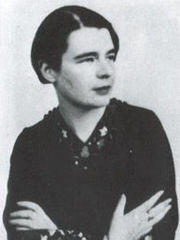
Marguerite Yourcenar

Marguerite Yourcenar was a renowned French novelist, known for her historical novels. Her works are celebrated for their profound insight and rich imagination, with her most famous novel being 'Orlando'. Born on June 8, 1903, she passed away on December 17, 1987. more

You May Also Like

“entre plusieurs opinions également reçues, je ne choisissais que les plus modérées, tant à cause que ce sont toujours les plus commodes pour la pratique, et vraisemblablement les meilleures, tous excès ayant coutume d'être mauvais, comme aussi afin de me détourner moins du vrai chemin, en cas que je faillisse, que si, ayant choisi l'un des extrêmes, c'eût été l'autre qu'il fallu suivre. (3e partie, para 2)”

“Kant is sometimes considered to be an advocate of reason. Kant was in favor of science, it is argued. He emphasized the importance of rational consistency in ethics. He posited regulative principles of reason to guide our thinking, even our thinking about religion. And he resisted the ravings of Johann Hamann and the relativism of Johann Herder. Thus, the argument runs, Kant should be placed in the pantheon of Enlightenment greats. That is a mistake. The fundamental question of reason is its relationship to reality. Is reason capable of knowing reality - or is it not? Is our rational faculty a cognitive function, taking its material form reality, understanding the significance of that material, and using that understanding to guide our actions in reality - or is it not? This is the question that divides philosophers into pro- and anti-reason camps, this is the question that divides the rational gnostics and the skeptics, and this was Kant’s question in his Critique of Pure Reason. Kant was crystal clear about his answer. Reality - real, noumenal reality - is forever closed off to reason, and reason is limited to awareness and understanding of its own subjective products… Kant was the decisive break with the Enlightenment and the first major step toward postmodernism. Contrary to the Enlightenment account of reason, Kant held that the mind is not a response mechanism but a constitute mechanism. He held that the mind - and not reality - sets the terms for knowledge. And he held that reality conforms to reason, not vice versa. In the history of philosphy, Kant marks a fundamental shift from objectivity as the standard to subjectivity as the standard. What a minute, a defender of Kant may reply. Kant was hardly opposed to reason. After all, he favored rational consistency and he believed in universal principles. So what is anti-reason about it? The answer is that more fundamental to reason than consistency and universality is a connection to reality. Any thinker who concludes that in principle reason cannot know reality is not fundamentally an advocate of reason… Suppose a thinker argued the following: “I am an advocate of freedom for women. Options and the power to choose among them are crucial to our human dignity. And I am wholeheartedly an advocate of women’s human dignity. But we must understand that a scope of a women’s choice is confined to the kitchen. Beyond the kitchen’s door she must not attempt to exercise choice. Within the kitchen, however, she has a whole feast of choices[…]”. No one would mistake such a thinker for an advocate of women’s freedom. Anyone would point out that there is a whole world beyond the kitchen and that freedom is essentially about exercising choice about defining and creating one’s place in the world as a whole. The key point about Kant, to draw the analogy crudely, is that he prohibits knowledge of anything outside our skulls. The gives reasons lots to do withing the skull, and he does advocate a well-organized and tidy mind, but this hardly makes him a champion of reason… Kant did not take all of the steps down to postmodernism, but he did take the decisive one. Of the five major features of Enlightenment reason - objectivity, competence, autonomy, universality, and being an individual faculty - Kant rejected objectivity.”