Quotessence
Home / Quotes / Quote by Ann-Marie MacDonald

Quote by Ann-Marie MacDonald

“I love the buildings. They're called skyscrapers. They're the closest thing to an ocean here. But it's an ocean that goes straight up, not flat out. They say that the body of water stretching away to the east of Manhattan is the ocean but it isn't. Not my ocean, anyway. It's weird because back home I just took it for granted, my grey-green sea. Now I have a granite ocean. It gives me the same happy-sad feeling I need sometimes. When I look straight up at the buildings I can feel alone in a good way. Not in that horrible way of no one knows me.”

Quote by Ann-Marie MacDonald

Work

Fall On Your Knees

This novel is a rich tapestry of interconnected stories that delve into the complexities of familial relationships and the search for personal identity. Set in Canada, it follows the lives of the Grant family, from the early 20th century to the present day, and examines the ways in which their actions and choices shape their lives and those of their descendants. more

Author

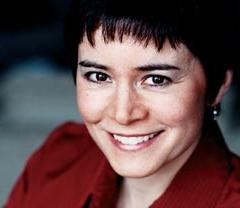
Ann-Marie MacDonald
Ann-Marie MacDonald

Ann-Marie MacDonald is a renowned Canadian playwright known for her unique narrative style and profound social insights. Born on October 29, 1958, she has been creating dramatic works since the 1980s and has won numerous Canadian literary awards. more

You May Also Like

“I lead a double life. I'm John Wayne Gacy. I present myself in potentially awkward social situations as a laughing, colorful clown to gain your regard. If you ask my friends and neighbors, they will tell you I'm "normal" and that I "keep to myself." Meanwhile, there's a crawlspace in the basement where I've buried my secrets. It's starting to get pretty crowded down there, but they are mine. And there they'll stay.”

“I realized that it was not Ko-san, now safely ditched for ever, but Ko-san's mother who stood in need of pity and consideration. She must still live on in this hard unpitying world, but he, once he had jumped [in battle], had jumped beyond such things. The case could well have been different, had he never jumped; but he did jump; and that, as they say, is that. Whether this world's weather turns out fine or cloudy no more worries him; but it matters to his mother. It rains, so she sits alone indoors thinking about Ko-san. And now it's fine, so she potters out and meets a friend of Ko-san's. She hangs out the national flag to welcome the returned soliders, but her joy is made querulous with wishing that Ko-san were alive. At the public bath-house, some young girl of marriageable age helps her to carry a bucket of hot water: but her pleasure from that kindness is soured as she thinks if only I had a daughter-in-law like this girl. To live under such conditions is to live in agonies. Had she lost one out of many children, there would be consolation and comfort in the mere fact of the survivors. But when loss halves a family of just one parent and one child, the damage is as irreparable as when a gourd is broken clean across its middle. There's nothing left to hang on to. Like the sergeant's mother, she too had waited for her son's return, counting on shriveled fingers the passing of the days and nights before that special day when she would be able once more to hang on him. But Ko-san with the flag jumped resolutely down into the ditch and still has not climbed back.”

“Sonnet I am no stranger in the house of pain; I am familiar with its every part, From the low stile, then up the crooked lane To the dark doorway, intimate to my heart. Here did I sit with grief and eat his bread, Here was I welcomed as misfortune’s guest, And there’s no room but where I’ve laid my head On misery’s accomodating breast. So, sorrow, does my knocking rouse you up? Open the door, old mother; it is I. Bring grief’s good goblet out, the sad, sweet cup; Fill it with wine of silence, strong and dry. For I’ve a story to amuse your ears, Of youth and hope, of middle age and tears.”

“Postpartum depression and anxiety that 11-20% of women experience is not at all the same as the more commonly experienced 'baby blues' 80% of women experience for a few weeks.”