Quotessence
Home / Quotes / Quote by Ann Petry

Quote by Ann Petry

“Lutie sat down near the back of the room. It was filled with colored women, sitting in huddled-over positions. They sat quietly, not moving. Their patient silence filled the room, made her uneasy. Why were all of them colored? Was it because the mothers of white children had safe places for them to play in, because the mothers of white children didn't have to work?”

Quote by Ann Petry

Work

The Street

Browse quotes and source details for this work. more

Author

Ann Petry
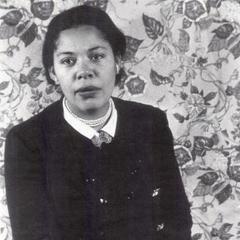
Ann Petry

Ann Petry was an American author born on October 12, 1908, and passed away on April 28, 1997. Her works primarily focused on racial and social issues, with notable titles including 'The Street'. more

You May Also Like

“I had nature in my heart, she said. Like she did, and her mother before her. There was something about us---the Weyward women---that bonded us more tightly with the natural world. We can feel it, she said, the same way we feel rage, sorrow, or joy. The animals, the birds, the plants---they let us in, recognizing us as one of their own. That is why roots and leaves yield so easily under our fingers, to form tonics that bring comfort and healing. That is why animals welcome our embrace. Why the crows---the ones who carry the sign---watch over us and do our bidding, why their touch brings our abilities into sharpest relief. Our ancestors---the women who walked these paths before us, before there were words for who they were---did not lie in the barren soil of the churchyard, encased in rotting wood. Instead, the Weyward bones rested in the woods, in the fells, where our flesh fed plants and flowers, where trees wrapped their roots around our skeletons. We did not need stonemasons to carve our names into rock as proof we had existed. All we needed was to be returned to the wild. This wildness inside gives us our name. It was men who marked us so, in the time when language was but a shoot curling from the earth. Weyward, they called us, when we would not submit, would not bend to their will. But we learned to wear the name with pride.”

“If we are ever going to see a paradigm shift, we have to be clear about how we want the present paradigm to shift. We must be clear that veganism is the unequivocal baseline of anything that deserves to be called an “animal rights” movement. If “animal rights” means anything, it means that we cannot morally justify any animal exploitation; we cannot justify creating animals as human resources, however “humane” that treatment may be. We must stop thinking that people will find veganism “daunting” and that we have to promote something less than veganism. If we explain the moral ideas and the arguments in favor of veganism clearly, people will understand. They may not all go vegan immediately; in fact, most won’t. But we should always be clear about the moral baseline. If someone wants to do less as an incremental matter, let that be her/his decision, and not something that we advise to do. The baseline should always be clear. We should never be promoting “happy” or “humane” exploitation as morally acceptable.”

“I remember a study that was done in the seventies (a study I've been trying to find unsuccessfully since the advent of the internet). It was a study of psychologists and psychiatrists, not of patients. They filled out three questionnaires, true or false questions. One was for the traits of a healthy man, next was for traits of a healthy woman, the third for traits of a healthy human being. The traits of a healthy man and human were the same, but a healthy woman was very different. Completely different. You know--softer, sweeter, more empathetic, less self-centered, less ambitious, more dependent. And these were the people who were treating people who were trying to live healthy lives.”