Quotessence
Home / Authors / Ann Petry Biography
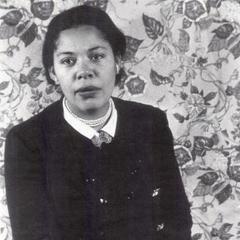
Ann Petry

Ann Petry Biography

Author

Related Quotes

“She got off the train, thinking that she never felt really human until she reached Harlem and thus got away from the hostility in the eyes of the white women who stared at her on the downtown streets and in the subway. Escaped from the openly appraising looks of the white men whose eyes seemed to go through her clothing to her long brown legs. On the trains their eyes came at her furtively from behind newspapers, or half-concealed under hatbrims or partly shielded by their hands. And there was a warm, moist look about their eyes that made her want to run. These other folks feel the same way, she thought—that once they are freed from the contempt in the eyes of the downtown world, they instantly become individuals. Up here they are no longer creatures labeled simply 'colored' and therefore all alike. She noticed that once the crowd walked the length of the platform and started up the stairs toward the street, it expanded in size. The same people who had made themselves small on the train, even on the platform, suddenly grew so large they could hardly get up the stairs to the street together. She reached the street at the very end of the crowd and stood watching them as they scattered in all directions, laughing and talking to each other.”

“Streets like the one she lived on were no accident. They were the North’s lynch mobs, she thought bitterly; the method the big cities used to keep Negroes in their place. And she began thinking of Pop unable to get a job; of Jim slowly disintegrating because he, too, couldn’t get a job, and of the subsequent wreck of their marriage; of Bub left to his own devices after school. From the time she was born, she had been hemmed into an ever-narrowing space, until now she was very nearly walled in and the wall had been built up brick by brick by eager white hands.”

“It wasn't just this street that she was afraid of or that was bad. It was any street where people were packed together like sardines in a can. And it wasn't just this city. It was any city where they set up a line and say black folks stay on this side and white folks on this side, so that the black folks were crammed on top of each other—jammed and packed and forced into the smallest possible space until they were completely cut off from light and air. It was any place where the women had to work to support the families because the men couldn't get jobs and the men got bored and pulled out and the kids were left without proper homes because there was nobody around to put a heart into it. Yes. It was any place where people were so damn poor they didn't have time to do anything but work, and their bodies were the only source of relief from the pressure under which they lived; and where the crowding together made the young girls wise beyond their years. It all added up to the same thing, she decided—white people. She hated them. She would always hate them.”

“She and Bub went to live with Pop in that crowded, musty flat on Seventh Avenue. She hunted for a job with a grim persistence that was finally rewarded, for two weeks later she went to work as a hand presser in a steam laundry. It was hot. The steam was unbearable. But she forced herself to go to night school—studying shorthand and typing and filing. Every time it seemed as though she couldn't possibly summon the energy to go on with the course, she would remind herself of all the people who had got somewhere in spite of the odds against them. She would think of the Chandlers and their young friends—'It's the richest damn country in the world.' Mrs. Chandler wrote her a long letter and Jim forwarded it to her from Jamaica. 'Lutie dear: We haven't had a decent thing to eat since you left. And Little Henry misses you so much he's almost sick—' She didn't answer it. She had more problems than Mrs. Chandler and Little Henry had and they could always find somebody to solve theirs if they paid enough.”

“Mom,' he said, 'why do white people want colored people shining shoes?' She turned toward him, completely at a loss as to what to say, for she had never been able to figure it out for herself. She looked down at her hands. They were brown and strong, the fingers were long and well-shaped. Perhaps because she was born with skin that color, she couldn't see anything wrong with it. She was used to it. Perhaps it was a shock just to look at skins that were dark if you were born with a skin that was white. Yet dark skins were smooth to the touch; they were warm from the blood that ran through the veins under the skin; they covered bodies that were just as well put together as the bodies that were covered with white skins. Even if it were a shock to look at people whose skins were dark, she had never been able to figure out why people with white skins hated people who had dark skins. It must be hate that made them wrap all Negroes up in a neat package labeled 'colored'; a package that called for certain kinds of jobs and a special kind of treatment. But she really didn't know what it was. 'I don't know, Bub,' she said finally. 'But it's for the same reason we can't live anywhere else but in places like this'—she indicated the cracked ceiling, the worn top of the set tub, and the narrow window, with a wave of the paring knife in her hand.”

“This world was one of great contrasts, she thought, and if the richest part of it was to be fenced off so that people like herself could only look at it with no expectation of ever being able to get inside it, then it would be better to have been born blind so you couldn't see it, born deaf so you couldn't hear it, born with no sense of touch so you couldn't feel it. Better still, born with no brain so that you would be completely unaware of anything, so that you would never know there were places that were filled with sunlight and good food and where children were safe.”

“The attendant looked at Camilo, looked at Link, blandly, incuriously. Link thought, In New York all the black boys who go in for what they like to call Caddies also go in for white girls. So this is old hat to him. He figures that if I'm rich enough--numbers or women or rackets of one kind or another--to drive one of these crates, then almost any good-looking white girl is going to find me acceptable. Money transforms the black male. Makes him beautiful in the eyes of the white female. Black and comely. No. It was black but comely, take it for granted that blackness and comeliness were not only possible but went hand in hand.”

“After a year of listening to their talk, she absorbed some of the same spirit. The belief that anybody could be rich if he wanted to and worked hard enough and figured it out carefully enough. Apparently that's what the Pizzinis had done. She and Jim could do the same thing, and she thought she saw what had been wrong with them before--they hadn't tried hard enough, worked long enough, saved enough. There hadn't been any one thing they wanted above and beyond everything else. These people had wanted only one thing--more and more money--and so they got it.”

“Well, of course," Camilo said, and grinned back at JohnRolandJoseph and his long line of bought and paid for ancestors, as friendly and unselfconscious as though all her life she had been looking for men, black men, big black men--plantation bucks (stud) look at his thighs, look at that back, look at his dingle-dangle--as though all her life she had been looking for colored men to whom she was not married, to whom she would never be married because she was already married to a nice young white man, as though all her life she had told uniformed monkeys who pulled elevators in rundown colored hotels, in Harlem, that she couldn't find, had lost, misplaced, a gentleman of color named Williams.”

“And Jim couldn't get a job, though he hunted for one — desperately, eagerly, anxiously. Walking from one employment agency to another; spending long hours in the musty agency waiting-rooms, reading old newspapers. Waiting, waiting, waiting to be called up for a job. He would come home shivering from the cold, saying, 'God damn white people anyway. I don't want favors. All I want is a job. Just a job. Don't they know if I know how I'd change the color of my skin?”

“Back in the eighteenth century I would have been a sliver-collar boy. Did you ever hear about them? The highborn ladies of the court collected monkeys and peacocks and little blackamoors for pets. Slender young dark brown boys done up in silk with turbans wrapped around their heads and silver collars around their necks, and the name of the lady to whom they belonged was engraved on the silver collar. They were supposed to be pets like the peacocks and the monkeys, but in the old oil paintings, the lady's delicate white hand always fondled the silkclad shoulder of the silver-collar boy. So you knew they were something more useful, more serviceable--”

“And she got the feeling that Boots Smith's relationship to this swiftly moving car was no ordinary one. He wasn't just a black man driving a car at a pell-mell pace. He had lost all sense of time and space as the car plunged forward into the cold, white night. The act of driving the car made him feel he was a powerful being who could conquer the world. Up over hills, fast down on the other side. It was like playing god and commanding everything within hearing to awaken and listen to him. The people sleeping in the white farmhouses were at the mercy of the sound of his engine roaring past in the night. It brought them half-awake—disturbed, uneasy. The cattle in the barns moved in protest, the chickens stirred on their roosts and before any of them could analyze the sound that had alarmed them, he was gone—on and on into the night. And she knew, too, that this was the reason white people turned scornfully to look at Negroes who swooped past them on the highways. 'Crazy niggers with autos' in the way they looked. Because they sensed that the black men had to roar past them, had for a brief moment to feel equal, feel superior; had to take reckless chances going around curves, passing on hills, so that they would be better able to face a world that took pains to make them feel that they didn't belong, that they were inferior. Because in that one moment of passing a white man in a car they could feel good and the good feeling would last long enough so that they could hold their heads up the next day and the day after that. And the white people in the cars hated it because—and her mind stumbled over the thought and then went on—because possibly they, too, needed to go on feeling superior. Because if they didn't, it upset the delicate balance of the world they moved in when they could see for themselves that a black man in a ratclap car could overtake and pass them on a hill. Because if there was nothing left for them but that business of feeling superior to black people, and that was taken away even for the split second of one car going ahead of another, it left them with nothing.”

“Queer how that was always cropping up. Here she was highly respectable, married, mother of a small boy, and, in spite of all that, knowing all that, these people took one look at her and immediately got that now-I-wonder look. Apparently it was an automatic reaction of white people—if a girl was colored and fairly young, why, it stood to reason she had to be a prostitute. If not that—at least sleeping with her would be just a simple matter, for all one had to do was make the request. In fact, white men wouldn't even have to do the asking because the girl would ask them on sight. She grew angrier as she thought about it. Of course, none of them could know about your grandmother who had brought you up, she said to herself. And ever since you were big enough to remember the things that people said to you, had said over and over, just like a clock ticking, 'Lutie, baby, don't you never let no white man put his hands on you. They ain't never willin' to let a black woman alone. Seems like they all got a itch and a urge to sleep with 'em. Don't you never let any of 'em touch you.' Something that was said so often and with such gravity it had become a part of you, just like breathing, and you would have preferred crawling in bed with a rattlesnake to getting in bed with a white man. Mrs. Chandler's friends and her mother couldn't possibly know that, couldn't possibly imagine that you might have a distrust and a dislike of white men far deeper than the distrust these white women had of you. Or know that, after hearing their estimation of you, nothing in the world could ever force you to be even friendly with a white man. And again she thought of the barrier between her and these people. The funny part of it was she was willing to trust them and their motives without questioning, but the instant they saw the color of her skin they knew what she must be like; they were so confident about what she must be like they didn't need to know her personally in order to verify their estimate.”

“You've driven one of these before." "Yeah." One of these, nice way to put it. Oh, you've held a tennis racket before, oh, you've worn shoes before, oh, you've used a toothbrush before. Bug Eyes is a weisenheimer but he was right. The lady is white. That surprised condescension in the voice is an unmistakable characteristic of the Caucasian, a special characteristic of the female Caucasian. The funny thing is they don't even know they do it.”

“She started choosing her words carefully. 'It's the way you were trying to earn money that made me mad,' she began. Then she leaned down until her face was on a level with his, still talking slowly, still picking her words thoughtfully. 'You see, colored people have been shining shoes and washing clothes and scrubbing floors for years and years. White people seem to think that's the only kind of work they're fit to do. The hard work. The dirty work. The work that pays the least.' She thought about this small dark apartment they were living in, about 116th Street which was filled to overflowing with people who lived in just such apartments as this, about the white people on the downtown streets who stared at her with open hostility in their eyes, and she started talking swiftly, forgetting to choose her words. 'I'm not going to let you begin at eight doing what white folks figure all eight-year-old colored boys ought to do. For if you're shining shoes at eight, you'll probably be doing the same thing when you're eighty. And I'm not going to have it.”

“She thought of the animals at the Zoo. She and Bub had gone there one Sunday afternoon. They arrived in time to see the lions and tigers being fed. There was a moment, before the great hunks of red meat were thrust into the cages, when the big cats prowled back and forth, desperate, raging, ravening. They walked in a space even smaller than the confines of the cages made necessary, moving in an area just barely the length of their bodies. A few steps up and turn. A few steps down and turn. They were weaving back and forth, growling, roaring, raging at the bars that kept them from the meat, until the entire building was filled with the sound, until the people watching drew back from the cages, feeling insecure, frightened at the sight and the sound of such uncontrolled savagery. She was becoming something like that.”

“You know a good-looking girl like you shouldn’t have to worry about money,’ he said softly. She didn’t say anything and he continued, ‘In fact, if you and me can get together a coupla nights a week in Harlem, those lessons won’t cost you a cent. No sir, not a cent.’ Yes, she thought, if you were born black and not too ugly, this is what you get, this is what you find. It was a pity he hadn’t lived back in the days of slavery, so he could have raided the slave quarters for a likely wench any hour of the day or night. This is the superior race, she said to herself, take a good long look at him: black, oily hair; slack, gross body; grease spots on his vest; wrinkled shirt collar; cigar ashes on his suit; small pig eyes engulfed in the fat of his face.”

“A cop on a motorcycle roared alongside, waved them to the curb. 'Goin' to a fire?' he demanded. He peered into the car and Lutie saw a slight stiffening of his face. That meant he had seen they were colored. She waited for his next words with a wincing feeling, thinking it was like having an old wound that had never healed and you could see someone about to knock against it and it was too late to get out of the way, and there was that horrible tiny split second of time when you waited for the contact, anticipating the pain and quivering away from it before it actually started. The cop's mouth twisted into an ugly line.”

“The women work because the white folks give them jobs—washing dishes and clothes and floors and windows. The women work because for years now the white folks haven’t liked to give black men jobs that paid enough for them to support their families. And finally it gets to be too late for some of them. Even wars don’t change it. The men get out of the habit of working and the houses are old and gloomy and the walls press in. And the men go off, move on, slip away, find new women. Find younger women.”

“She supposed the young colored men of Link's generation couldn't have manners like Mr. Powther's, though she didn't know why. Wars and atom bombs and the fact that there was so much hate in the world might have something to do with it. There were times when she had thought that rudeness was a characteristic of Link's; that other young men had a natural courtesy he would never have. Then she would see or hear something in The Narrows that suggested all these young men were alike--something had brutalized them. But what?”

“All marriages are like this. The component parts are contempt and irritation because we know each other by heart, by rote; we're all graduates of the blab school for double harness. Then he looked at the redgold hair, the sweet curve of the mouth, and thought, Truthlie, because marriage is more than that. It's part hate, part love. It's remembered agony, and remembered delight.”

“Yet she could feel a hard, tight knot of anger and hate forming within her as she walked along. She decided to walk home, hoping that the anger would evaporate on the way. She moved in long, swift strides. There was a hard sound to her heels clicking against the sidewalk and she tried to make it louder. Hard, hard, hard. That was the only way to be--so hard that nothing, the street, the house, the people--nothing would ever be able to touch her.”

“Black was bestlooking. ... Ebony was the best wood, the hardest wood; it was black. Virginia ham was the best ham. It was black on the outside. Tuxedos and tail coats were black and they were a man's finest, most expensive clothes. You had to use pepper to make most meats and vegetables fit to eat. The most flavorsome pepper was black. The best caviar was black. The rarest jewels were black: black opals, black pearls.”