Quotessence
Home / Quotes / Quote by Ann Petry

Quote by Ann Petry

“It wasn't just this street that she was afraid of or that was bad. It was any street where people were packed together like sardines in a can. And it wasn't just this city. It was any city where they set up a line and say black folks stay on this side and white folks on this side, so that the black folks were crammed on top of each other—jammed and packed and forced into the smallest possible space until they were completely cut off from light and air. It was any place where the women had to work to support the families because the men couldn't get jobs and the men got bored and pulled out and the kids were left without proper homes because there was nobody around to put a heart into it. Yes. It was any place where people were so damn poor they didn't have time to do anything but work, and their bodies were the only source of relief from the pressure under which they lived; and where the crowding together made the young girls wise beyond their years. It all added up to the same thing, she decided—white people. She hated them. She would always hate them.”

Quote by Ann Petry

Work

The Street

Browse quotes and source details for this work. more

Author
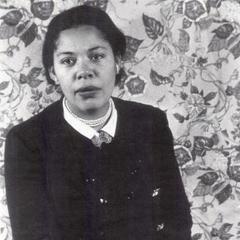
Ann Petry
Ann Petry

Ann Petry was an American author born on October 12, 1908, and passed away on April 28, 1997. Her works primarily focused on racial and social issues, with notable titles including 'The Street'. more

You May Also Like

“There are more people now, more children, going without health care ... A medical team surveying twenty-five hundred poor children in the District found that eight out of ten had untreated medical or dental problems. The infant mortality rate in the District, already the highest in the nation and higher than that of many Third World nations, actually rose ... and prenatal care was considered an important causative factor. ~Lenore Horowitz, quoted by Jimmy Carter”

“A confession. At the beginning of my career, I would inwardly roll my eyes at children who had no schoolbooks but the latest mobile phones or sneakers... I had misunderstood many things ... a poor but stable family is very different from a poor and unstable one...mobile phones and hoodies sometimes carry far more meaning than their superficial appearance...Parents who have very little can carry enormous burdens of guilt born of love; their hearts ache with the knowledge of the happiness that is missing in a childhood that is, after all, painfully fleeting. Such parents often remember the privations and suffering of their own youth and don't want them to be repeated.”

“It's not that Teta doesn't think about money—that's a privilege our family will never know—but to discuss her anxieties with me would be 'ayb. It would be a mark of shame; she'd feel like she'd failed me. The children and grandchildren of "real Americans," the ones who made it, shouldn't need to fear poverty. But Teta has found walls in this country that she never could have imagined.”

“If man draws all his knowledge, sensation, etc., from the world of the senses and the experience gained in it, then what has to be done is to arrange the empirical world in such a way that man experiences and becomes accustomed to what is truly human in it and that he becomes aware of himself as man. If correctly understood, interest is the principle of all morality, man’s private interest must be made to coincide with the interest of humanity. If man is unfree in the materialistic sense, i.e., is free not through the negative power to avoid this or that, but through the positive power to assert his true individuality, crime must not be punished in the individual, but the anti-social sources of crime must be destroyed, and each man must be given social scope for the vital manifestation of his being. If man is shaped by environment, his environment must be made human. If man is social by nature, he will develop his true nature only in society, and the power of his nature must be measured not by the power of the separate individual but by the power of society.”

“The wealth gap between America's richest and poorest families has doubled in the past thirty years. If the systems don't reform, they will eventually collapse under the weight of their corruption or be torn down by masses who will rightfully view them only as architects of their oppression.”