Quotessence
Home / Authors / Ann Petry
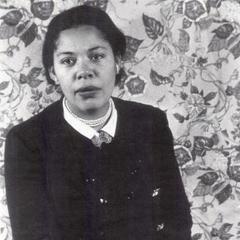
Ann Petry

Ann Petry Quotes

Author

Filter quotes by topic

Famous Ann Petry Quotes

“She got off the train, thinking that she never felt really human until she reached Harlem and thus got away from the hostility in the eyes of the white women who stared at her on the downtown streets and in the subway. Escaped from the openly appraising looks of the white men whose eyes seemed to go through her clothing to her long brown legs. On the trains their eyes came at her furtively from behind newspapers, or half-concealed under hatbrims or partly shielded by their hands. And there was a warm, moist look about their eyes that made her want to run. These other folks feel the same way, she thought—that once they are freed from the contempt in the eyes of the downtown world, they instantly become individuals. Up here they are no longer creatures labeled simply 'colored' and therefore all alike. She noticed that once the crowd walked the length of the platform and started up the stairs toward the street, it expanded in size. The same people who had made themselves small on the train, even on the platform, suddenly grew so large they could hardly get up the stairs to the street together. She reached the street at the very end of the crowd and stood watching them as they scattered in all directions, laughing and talking to each other.”

“Streets like the one she lived on were no accident. They were the North’s lynch mobs, she thought bitterly; the method the big cities used to keep Negroes in their place. And she began thinking of Pop unable to get a job; of Jim slowly disintegrating because he, too, couldn’t get a job, and of the subsequent wreck of their marriage; of Bub left to his own devices after school. From the time she was born, she had been hemmed into an ever-narrowing space, until now she was very nearly walled in and the wall had been built up brick by brick by eager white hands.”

“Mom,' he said, 'why do white people want colored people shining shoes?' She turned toward him, completely at a loss as to what to say, for she had never been able to figure it out for herself. She looked down at her hands. They were brown and strong, the fingers were long and well-shaped. Perhaps because she was born with skin that color, she couldn't see anything wrong with it. She was used to it. Perhaps it was a shock just to look at skins that were dark if you were born with a skin that was white. Yet dark skins were smooth to the touch; they were warm from the blood that ran through the veins under the skin; they covered bodies that were just as well put together as the bodies that were covered with white skins. Even if it were a shock to look at people whose skins were dark, she had never been able to figure out why people with white skins hated people who had dark skins. It must be hate that made them wrap all Negroes up in a neat package labeled 'colored'; a package that called for certain kinds of jobs and a special kind of treatment. But she really didn't know what it was. 'I don't know, Bub,' she said finally. 'But it's for the same reason we can't live anywhere else but in places like this'—she indicated the cracked ceiling, the worn top of the set tub, and the narrow window, with a wave of the paring knife in her hand.”

“You've driven one of these before." "Yeah." One of these, nice way to put it. Oh, you've held a tennis racket before, oh, you've worn shoes before, oh, you've used a toothbrush before. Bug Eyes is a weisenheimer but he was right. The lady is white. That surprised condescension in the voice is an unmistakable characteristic of the Caucasian, a special characteristic of the female Caucasian. The funny thing is they don't even know they do it.”

“You know a good-looking girl like you shouldn’t have to worry about money,’ he said softly. She didn’t say anything and he continued, ‘In fact, if you and me can get together a coupla nights a week in Harlem, those lessons won’t cost you a cent. No sir, not a cent.’ Yes, she thought, if you were born black and not too ugly, this is what you get, this is what you find. It was a pity he hadn’t lived back in the days of slavery, so he could have raided the slave quarters for a likely wench any hour of the day or night. This is the superior race, she said to herself, take a good long look at him: black, oily hair; slack, gross body; grease spots on his vest; wrinkled shirt collar; cigar ashes on his suit; small pig eyes engulfed in the fat of his face.”

“A cop on a motorcycle roared alongside, waved them to the curb. 'Goin' to a fire?' he demanded. He peered into the car and Lutie saw a slight stiffening of his face. That meant he had seen they were colored. She waited for his next words with a wincing feeling, thinking it was like having an old wound that had never healed and you could see someone about to knock against it and it was too late to get out of the way, and there was that horrible tiny split second of time when you waited for the contact, anticipating the pain and quivering away from it before it actually started. The cop's mouth twisted into an ugly line.”

“The women work because the white folks give them jobs—washing dishes and clothes and floors and windows. The women work because for years now the white folks haven’t liked to give black men jobs that paid enough for them to support their families. And finally it gets to be too late for some of them. Even wars don’t change it. The men get out of the habit of working and the houses are old and gloomy and the walls press in. And the men go off, move on, slip away, find new women. Find younger women.”