Quotessence
Home / Authors / Ann Petry
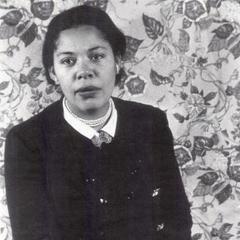
Ann Petry

Ann Petry Quotes

Author

Filter quotes by topic

Famous Ann Petry Quotes

“Streets like the one she lived on were no accident. They were the North’s lynch mobs, she thought bitterly; the method the big cities used to keep Negroes in their place. And she began thinking of Pop unable to get a job; of Jim slowly disintegrating because he, too, couldn’t get a job, and of the subsequent wreck of their marriage; of Bub left to his own devices after school. From the time she was born, she had been hemmed into an ever-narrowing space, until now she was very nearly walled in and the wall had been built up brick by brick by eager white hands.”

“It wasn't just this street that she was afraid of or that was bad. It was any street where people were packed together like sardines in a can. And it wasn't just this city. It was any city where they set up a line and say black folks stay on this side and white folks on this side, so that the black folks were crammed on top of each other—jammed and packed and forced into the smallest possible space until they were completely cut off from light and air. It was any place where the women had to work to support the families because the men couldn't get jobs and the men got bored and pulled out and the kids were left without proper homes because there was nobody around to put a heart into it. Yes. It was any place where people were so damn poor they didn't have time to do anything but work, and their bodies were the only source of relief from the pressure under which they lived; and where the crowding together made the young girls wise beyond their years. It all added up to the same thing, she decided—white people. She hated them. She would always hate them.”

“She and Bub went to live with Pop in that crowded, musty flat on Seventh Avenue. She hunted for a job with a grim persistence that was finally rewarded, for two weeks later she went to work as a hand presser in a steam laundry. It was hot. The steam was unbearable. But she forced herself to go to night school—studying shorthand and typing and filing. Every time it seemed as though she couldn't possibly summon the energy to go on with the course, she would remind herself of all the people who had got somewhere in spite of the odds against them. She would think of the Chandlers and their young friends—'It's the richest damn country in the world.' Mrs. Chandler wrote her a long letter and Jim forwarded it to her from Jamaica. 'Lutie dear: We haven't had a decent thing to eat since you left. And Little Henry misses you so much he's almost sick—' She didn't answer it. She had more problems than Mrs. Chandler and Little Henry had and they could always find somebody to solve theirs if they paid enough.”

“Mom,' he said, 'why do white people want colored people shining shoes?' She turned toward him, completely at a loss as to what to say, for she had never been able to figure it out for herself. She looked down at her hands. They were brown and strong, the fingers were long and well-shaped. Perhaps because she was born with skin that color, she couldn't see anything wrong with it. She was used to it. Perhaps it was a shock just to look at skins that were dark if you were born with a skin that was white. Yet dark skins were smooth to the touch; they were warm from the blood that ran through the veins under the skin; they covered bodies that were just as well put together as the bodies that were covered with white skins. Even if it were a shock to look at people whose skins were dark, she had never been able to figure out why people with white skins hated people who had dark skins. It must be hate that made them wrap all Negroes up in a neat package labeled 'colored'; a package that called for certain kinds of jobs and a special kind of treatment. But she really didn't know what it was. 'I don't know, Bub,' she said finally. 'But it's for the same reason we can't live anywhere else but in places like this'—she indicated the cracked ceiling, the worn top of the set tub, and the narrow window, with a wave of the paring knife in her hand.”

“This world was one of great contrasts, she thought, and if the richest part of it was to be fenced off so that people like herself could only look at it with no expectation of ever being able to get inside it, then it would be better to have been born blind so you couldn't see it, born deaf so you couldn't hear it, born with no sense of touch so you couldn't feel it. Better still, born with no brain so that you would be completely unaware of anything, so that you would never know there were places that were filled with sunlight and good food and where children were safe.”