Quotessence
Home / Quotes / Quote by Frank Herbert

Quote by Frank Herbert

“Mood’s a thing for cattle or for making love. You fight when the necessity arises, no matter your mood.”

Quote by Frank Herbert

Book:DUNE

Work

DUNE

Frank Herbert's 'DUNE' is a seminal work in the science fiction genre, known for its intricate world-building and complex political intrigue. The story follows Paul Atreides, a young nobleman who must navigate a treacherous landscape of political machinations and religious fervor. The novel is set on the desert planet Arrakis, which is rich in a valuable resource known as melange, essential for interstellar travel. 'DUNE' explores themes of religion, politics, ecology, and the human condition, and has been praised for its depth and philosophical musings. more
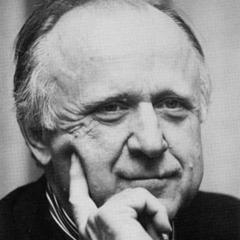
Author

Frank Herbert
Frank Herbert

Frank Herbert, born on October 8, 1920, was an influential science fiction author from the United States. His masterpiece 'Dune' is considered a classic in the science fiction genre and has had a profound impact on literature and society. more

You May Also Like

“Escherichia colia O157:H7 is a relatively new strain of the common intestinal bacteria (no one had seen it before 1980) that thrives in feedlot cattle, 40 percent of which carry it in their gut. Ingesting as few as ten of these microbes can cause a fatal infection; they produce a toxin that destroys human kidneys.”

“Everything I thought about cows as an Easterner-come-west is wrong. They are not symbols of a noble culture of mounted herdsmen. They are not cute. They are an invasive species, Bos Taurus, a water-loving European animal not fit for arid climates, and their cancer-like effects on the land have not ceased.”

“When the longhorns could be gathered up and driven, it was theorized that the heat from the herd's mass attracted lightning. (Such was the radiant heat from a large herd that a cowboy's face would be blistered on whichever side of the herd he'd ridden by the day's end.) Their great horns also seemed to attract electricity, so that lightning and ground-electricity would bounce around from horn to horn throughout the herd - a phantasmagoric burning blue circuitry. The cracking of the cowboy's whips and the twitching of the cattle's tails also emitted sparkling "snakes of fire.”

“Animals arrive at slaughter exhausted, thirsty, hungry, and terrified. Every year 100,000 factory farmed cattle arrive at slaughter injured, or too dispirited to walk; undercover investigators have repeatedly documented downed animals who are kicked, beaten, pushed with bulldozers, and dragged from transport trucks with ropes or a chain, though they are fully conscious, in pain, and bellowing pitifully. Cows exploited in the dairy industry, because they are older and their bodies have been exhausted by perpetual pregnancy, birthing, and milking, are among the most pathetic when they arrive at slaughter.”

“They don't have the time to take on animals with dietary restrictions and missing legs." "Do you think I don't know that? That's precisely why they're all here with me. No one else would take them. Angus, for example." She moved toward the Highland steer. "Some foolish merchant traveled to Scotland on holiday and decided to bring his wife a pet calf from the Highlands. Never stopped to think about the fact that he would grow." "Surely people aren't that stupid." "Oh, it happens all the time. But usually they make that mistake with pups or ponies. Not cattle." She shook her head. "They dehorned him in the worst, most painful way. When he came to me, the poor dear's wounds were infected. Infested, too. He could have perished from the fly-strike alone. That man was stupid, indeed. The only thing he got right was his choice of calf. Angus is exceedingly adorable." Adorable? Gabe eyed the beast. The animal stood as tall as Gabe's shoulder, and it smelled... the way cattle smell. Shaggy red fur covered its eyes like a blindfold, and its black, spongy nose glistened.”

“Public grazing provides just one dollar out of every $2,500 of taxable income in the West, or 0.04 percent, and just one out of everything 1,400 jobs, or 0.07 percent. On both public and private lands in the eleven Western states, the livestock industry accounts for less than 0.5 percent of all income.”