Quotessence
Home / Quotes / Quote by Kenneth Roberts

Quote by Kenneth Roberts

“That's one reason why a civil war is worse than any other sort. When two parties in a given country resort to arms to settle political differences, every man is a potential enemy to every other man, and the distinction between legalized killing and murder is not clearly drawn in the minds of average men, who are incapable of sustained thought. Death is held to be a fitting reward for those who dare hold contrary views, and a nation involved in a civil war is a breeding ground for children reared to look with tolerance on next to nothing but violence.”

Quote by Kenneth Roberts

Work

Oliver Wiswell

Oliver Wiswell is a novel that delves into the tumultuous era of the American Revolution through the eyes of its protagonist, Oliver Wiswell, a young orphan who finds himself swept up in the conflict. The story follows Oliver's journey as he navigates the complexities of war, loyalty, and personal growth. more

Author

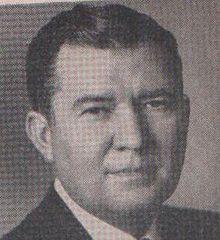
Kenneth Roberts
Kenneth Roberts

Kenneth Roberts was an American author renowned for his historical novels. His works, often set against the backdrop of American history, delve deeply into the characters and their fates. He was born on December 8, 1885, and died on July 21, 1957. more

You May Also Like

“The British were unhinged by the colonists' unorthodox fighting style and shocking failure to abide by gentlemanly rules of engagement. One scandalized British soldier complained that the American riflemen 'conceal themselves behind trees etc. till an opportunity presents itself of taking a shot at our advance sentries, which done, they immediately retreat. What an unfair method of carrying on a war!”

“I feel in good spirits, though surrounded by an Army, the house full of officers, the yard alive with soldiers, - very peaceable sort of men, tho'. They eat like other folks, talk like them, and behave themselves with elegance; so I will not be afraid of them, that I won't.”

“They were not, I am certain almost, first-rate gentlemen. (How different from our other officers.) But they are gone to Virginia, where they may sing, dance, and eat turkey hash and fry'd hominy all day long, if they choose.”

“If you don’t take the time to set your lighthouse and focus on who you want to be and what you want to accomplish, the lack of results will leave you unsatisfied. You have to be willing to come up with goals beyond anything you feel comfortable with and start driving forward to a future that might seem impossible right now.”

“[During World War I] General Pershing, commander in chief of our expeditionary forces, on arriving in France, officially visited Lafayette's grave, laid a wreath on it, and said, "Lafayette, we are here." By this, he meant that the Americans were eager to repay to France their debt of gratitude for what Lafayette had done for them during the Revolutionary War.”

“On a number of occasions, Tamara joined “Che” on his sorties into the Bolivian highlands, without incident. However, on March 24, 1967, a guerrilla fighter who had been captured by the Bolivian army betrayed her by giving away Tamara’s location. Although she escaped, the Bolivian soldiers found an address book in her Jeep and came after her in hot pursuit. With no other place to hide, she made her way back to “Che” Guevara’s forces. It was considered an open secret that Tamara had been intimate with “Che” but now the troops could not help but notice what was going on. The way they looked into each other’s eyes, and whispered sweet nothings, left no doubt in anyone’s mind, but that she was his lover…. The Bolivian highlands are notorious for the infestation of the Chigoe flea parasite, which infected Tamara. Having a leg injury and running a high fever, she and 16 other ailing fighters were ordered out of the region by Guevara. On August 31, 1967, up to her waist in the Rio Grande of Bolivia, and holding her M 1 rifle above her head, she and eight men were shot and killed in a hail of gunfire by Bolivian soldiers. Leaving their bodies in the water, it was several days before they were recovered downstream. Piranhas had attacked the bodies and their decomposing carcasses were polluting the water. Since the water was being used for drinking purposes by the people in a nearby village, the soldiers were ordered to clear the bodies out of the river. As they were preparing to bury Tamara’s remains in an unmarked grave, a local woman protested what was happening, and demanded that a woman should receive a Christian burial. When he received the news of what had happened, Guevara was stunned and refused to accept it, thinking it was just a propaganda stunt to demoralize him. In Havana Fidel Castro declared her a “Heroine of the Revolution.” There is always the possibility that Tamara was a double agent, whose mission it was to play up to “Che” when they met in Leipzig and then report back to the DDR (Democratic German Republic), who would in turn inform the USSR of “Che’s” activities. The spy game is a little like peeling an onion. Peel off one layer and what you find is yet another layer.”