Quotessence
Home / Quotes / Quote by Voltaire

Quote by Voltaire

“It is man´s faith to live either on agonies of fear and turmoil or in the prostration of boredom.”
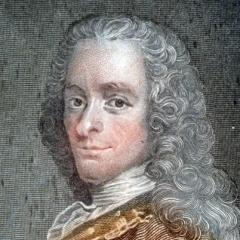
Quote by Voltaire

Book:Candide

Work

Candide

Voltaire's renowned work is a philosophical and humorous narrative that follows the adventures of Candide, a young man who embarks on a journey through various trials and tribulations, questioning the optimism of his mentor, Dr. Pangloss. more

Author

Voltaire
Voltaire

Voltaire, a French Enlightenment philosopher, writer, and thinker, was born on November 21, 1694, and died on May 30, 1778. He had a profound impact on philosophy, literature, and science in France and Europe with his sharp wit and critical spirit. more

You May Also Like

“The shrieks were coming from two quite naked girls, who were pursued by a pair of apes snapping at their bottoms. [...] So he now raises his double-barrelled Spanish rifle, fires and kills both apes. 'God be praised, my dear Calambo! I have delivered these two poor creatures from grave peril; if it was a sin to kill an Inquisitor and a Jesuit, I have made ample amends by saving the lives of two girls [...]' He was about to continue, but words failed him when he saw the two girls throw their arms lovingly around the two apes and collapse in tears over their corpses, filling the air with the most pitiful lamentations. 'I was not expecting quite so much tenderness of heart,' he said at last to Cacambo, who replied: 'You've excelled yourself this time, Master; you have just despatched the two lovers of these young ladies.' '-Their lovers! Is it possible? You're making fun of me, Cacambo; how could anyone believe in such a thing?' - 'My dear Master,' retorted Cacambo, 'you are always astounished by everything; why do you find it so strange that in some countries it is apes who enjoy the favours of young ladies? After all, they are one-quarter human, just as I am one-quarter Spanish.”

“They docked at Buenos Aires. Cunégonde, Captain Candide, and the old woman went to call on the Governor, Don Fernando d'Ibaraa y Figueora y Mascarenes y Lampourdos y Souza. This grandee had a pride to match his many names. He spoke to people with the most noble disdain, sticking his nose so far in the air, speaking in such a mercilessly loud voice, adopting so high and mighty a tone, and affecting so haughty a gait, that all who greeted him were also tempted to hit him.”