Quotessence
Home / Quotes / Quote by Lillian Hellman

Quote by Lillian Hellman

Author

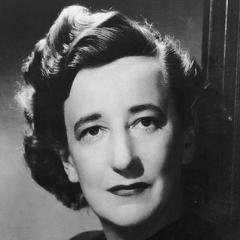
Lillian Hellman
Lillian Hellman

Lillian Hellman was an American playwright and screenwriter, renowned for her dramatic works and political activism. Her plays frequently delved into themes of political intrigue and personal morality, making her a significant figure in American theater during the mid-20th century. more

You May Also Like

“Stalin perceived the world in stark black and white. In the same way, he divided people, nations, actions, and ideas into only two absolute categories: “ours” and “theirs.” “Ours” were all those — and everything — that, at the moment of decision, fell under his control or contributed to strengthening it. “Theirs” were everyone else, and everything else. He saw his role as a strategist in constructing a system of power that would force each of the “ours,” individually and collectively, to work at the very limit of human endurance in order to fulfill his strategic design. That design was simple and ruthless: to endlessly increase the number and strength of the “ours” by coercing the “theirs” into becoming “ours,” while simultaneously destroying — or, as a last resort, neutralizing — all who refused to submit. — Volodymyr Shablia, Stone. Book One Context note: This passage reflects the ideological logic of Stalinist totalitarianism, where power was built on absolute division, forced loyalty, and systematic repression. In the Soviet worldview of the 1930s–1940s, survival depended on belonging to “ours” — or being destroyed as “theirs.”

“If your case, as a politically repressed person, is reviewed by the Special Council, you are almost guaranteed the standard sentence: ten years in labor camps plus three years’ loss of civil rights. The Special Council delivers verdicts in batches, so it simply does not have time to examine each case in detail. But if a judicial panel hears your case—and if I, as the prosecutor, withdraw the charges—you might even be acquitted. For that, however, you would need to submit a request to be sent to the front and, if acquitted, go to war.” “And are you prepared to withdraw the charges?” Peter asked in surprise. “I will be frank with you,” the prosecutor replied, enunciating each word. “As a patriot of my country, I believe that in wartime young, strong, and intelligent men like you should fight the enemy—not rot in the camps. Two of my own sons are at the front fulfilling their duty to the Motherland, and I am ready to help you do the same.” “Thank you,” Peter said firmly. “I, too, am ready to defend my country rather than remain safely in the rear.” Context note: Set during World War II under Stalin’s regime, this scene exposes the legal absurdity of Soviet repression, where “justice” depended less on evidence than on political expediency. Special tribunals could issue sentences in batches, while wartime necessity sometimes transformed prisoners into soldiers—revealing a system in which ideology, survival, and patriotism collided.”

“I fear that even my authority as an army commander won’t help. The fear of the High Command is too great.”

“Merritt was about to reply, but she froze, her hand suspended in midair. The window happened to be positioned to mirror the opening of the next room with remarkable clarity. The naked form of Keir MacRae was reflected in the glass as he crossed the bedroom. She went hot and cold all over, riveted as he bent to take a pair of trousers from the leather trunk. His movements were easy, graceful with a sense of coiled power, and that body- "You're going to work through the night without any dinner at all?" she heard herself ask. -with those long, elegant expanses of tightly knit muscle and sinew- "I'll be fine," he said. -was magnificent. Fantasy wrought into flesh. And just before he fastened the trousers, she couldn't help noticing the man was incredibly endowed.”