Quotessence
Home / Quotes / Quote by Jane Austen

Quote by Jane Austen

Work

Emma

Emma, written by Jane Austen, is a satirical novel that explores themes of social status, romance, and the complexities of human relationships. The narrative follows the protagonist, Emma Woodhouse, a wealthy and somewhat naive young woman who becomes involved in the romantic entanglements of those around her. Through her meddlesome attempts to matchmake, Emma learns valuable lessons about herself and the society in which she lives. more
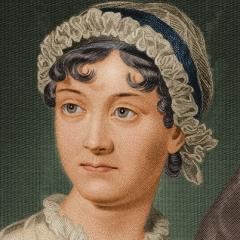
Author

Jane Austen
Jane Austen

Jane Austen, born on December 16, 1775, and died on July 18, 1817, was a renowned English novelist of the 19th century. Known for her exquisite psychological portrayals and satirical humor, Austen's works mainly revolve around rural life in England, depicting the customs and interpersonal relationships of the time. Her representative works include 'Pride and Prejudice' and 'Sense and Sensibility'. more

You May Also Like

“As I looked out at the water, I realized there was nowhere to go, nowhere left to run. And I just had to stay here facing this terrible truth. I felt, as more tears fell, just how tired I was, a tiredness that had nothing to do with the hour. I was tired of running from this, tired of pretending that things were okay when they had never, ever been less okay.”

“No matter how an individual views Satan, whether they believe that he is a real character or that he is just the product of literary scholars and imaginations, no one can deny that each one of us has an aspect of the devil within us. By studying the character and nature of Satan, we learn about ourselves; and the more we know about ourselves, the better we can fight our own personal demons—metaphorical or otherwise—in order to create a better tomorrow”

“At the age of fifteen, during the winter when she’d discovered smashball, romance, and her parents’ profound imperfections, Mon Mothma had decided to devote her life to studying history; decided to turn her back on her family’s political dynasty and to spend her days in a cramped study reading thousand-year-old diaries and letters and cargo manifests until her eyes burned. She would be detective, coroner, and philosopher all at once, examining means and motive and cause of death for entire civilizations. She hadn’t become a historian, of course. By the next summer, Mon’s moment of rebellion had been forgotten. Inertia and family pressures and a genuine love of governance had returned her to the road to politics. She’d gone on to become a senator (far too young, she thought now) and scrabbled for votes and smiled and kept her head above water until she’d learned how to play the game for real.”

“The deal was struck. The weight of it settled onto Genthar’s shoulders like a cloak of iron. Jessar’s smirk lingered like the taste of bitter wine, and for a moment, Genthar wished he had refused—wished he had stormed out of Goldstone, consequences be damned.
But this was not a world for wishes. It was a world where the past refused to stay buried and the future was bought with sacrifice.”