Quotessence
Home / Quotes / Quote by M. Scott Peck

Quote by M. Scott Peck

“Love is not simply giving; it is judicious giving and judicious withholding as well. It is judicious praising and judicious criticizing. It is judicious arguing, struggling, confronting, urging, pushing and pulling in addition to comforting. It is leadership. The word "judicious" means requiring judgment, and judgment requires more than instinct; it requires thoughtful and often painful decisionmaking.”

Quote by M. Scott Peck

Work

The Road Less Traveled: A New Psychology of Love, Traditional Values and Spiritual Growth

This book delves into the complexities of human relationships and self-improvement, offering readers a unique perspective on love, personal values, and spiritual development. more

Author
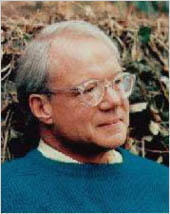
M. Scott Peck
M. Scott Peck

M. Scott Peck was an American psychiatrist and writer, best known for his book 'The Road Less Traveled', which delves into themes of personal growth, psychotherapy, and the human mind. His writing style has been widely appreciated, and his works have had a profound impact on the fields of psychology and philosophy. more

You May Also Like

“And do you want to marry him?" "Maybe. I don't know." "That kind of indifference usually means no." "It's not indifference. I just haven't made up my mind." "Either you want to marry him more than anything in the world, or you say no. It's very simple." "It's not simple," Faye said. "Not at all. You don't understand." "So explain it to me." "Okay, here's what it's like. Imagine you're feeling desperately thirsty. Like insanely thirsty. All you can think about is a big tall glass of water. Got it?" "Got it." "And you fantasize about this big tall glass of water, and the fantasy is really vivid in your head, but it does not actually quench your thirst." "Because you can't drink the imaginary glass of water." "Right. So you look around and see this murky, oily puddle of water and mud. It's not exactly the tall glass of water but it does have the advantage of being wet. It's real, whereas the tall glass of water is not. And so you choose the oily mud puddle, even though it's not really what you'd prefer.”

“The second most common misconception about love is the idea that dependency is love...Its effect is seen most dramatically in an individual who makes an attempt or gesture or threat to commit suicide or who becomes incapacitatingly depressed in response to a rejection or separation from spouse or lover...... When you require another individual for your survival, you are a parasite on that individual. There is no choice, no freedom involved in your relationship. It is a matter of necessity rather than love, love is the free exercise of choice. Two people love each other only when they are quite capable of living without each other but choose to live with each other.”

“One form of insecurity of attachment, called "disorganized/disoriented", has been associated with marked impairments in the emotional, social, and cognitive domains, and a predisposition toward a clinical condition known as dissociation in which the capacity to function in an organized, coherent manner is at times impaired. Studies have also found that youths with a history of disorganized attachments are at great risk of expressing hostility with their peers and have the potential for interpersonal violence as they mature (Lyons-Ruth & Jacobwitz, 1999; Carlson, 1998). This disorganized form of attachment has been proposed to be associated with the caregiver's frightened, frightening, or disoriented behavior with the child. Such experiences create a state of alarm in the child. The parents of these children often have an autobiographical narrative finding, as revealed in the Adult Attachment Interview, of unresolved trauma or grief that appears as a disorientation in their narrative account of their childhoods. Such linguistic disorientation occurs during the discussion of loss or threat from childhood experiences. Lack of resolution appears to be associated with parental behaviors that are incompatible with an organized adaptation on the part of the child. Lack of resolution of trauma or grief in a parent can lead to parental behaviors that create "paradoxical", unsolvable, and problematic situations for the child. The attachment figure is intended to be the source of protection, soothing, connections, and joy. Instead, the experience of the child who develops a disorganized attachment is such that the caregiver is actually the source of terror and fear, of "fright without solution", and so the child cannot turn to the attachment figure to be soothed (Main & Hesse, 1990). There is not organized adaptation and the child's response to this unsolvable problem is disorganization (see Hesse et al., this volume).”