Quotessence
Home / Quotes / Quote by Charlotte Perkins Gilman

Quote by Charlotte Perkins Gilman

“I really have discovered something at last. Through watching so much at night, when it changes so, I have finally found out. The front pattern does move - and no wonder! The woman behind shakes it! Sometimes I think there are a great many women behind, and sometimes only one, and she crawls around fast, and her crawling shakes it all over. Then in the very ' bright spots she keeps still, and in the very shady spots she just takes hold of the bars and shakes them hard. And she is all the time trying to climb through. But nobody could climb through that pattern - it strangles so:...”

Quote by Charlotte Perkins Gilman

Work

The Yellow Wall-paper

Charlotte Perkins Gilman's classic short story delves into the psychological effects of postpartum depression and the oppressive nature of Victorian-era domestic life through the perspective of a woman confined to a room with a yellow wallpaper. more

Author
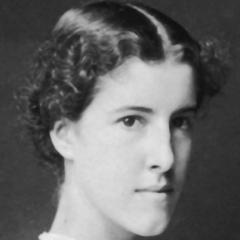
Charlotte Perkins Gilman

Charlotte Perkins Gilman was an American novelist, social reformer, and feminist. Her works explored the status of women in society, family, and career, and had a profound impact on women's literature and social movements. more

You May Also Like

“Seek out the company of those who will never ask you to jump," the earth advised. Bertie remembered the rush of feathers as she soared above the audience. "I can catch myself." "Of those whose love will never fill your lungs with water-" the earth argued. "But it did not kill me." "there should be more to love," said the earth, "than 'it did not kill me.' More than 'I survived it.”

“Take time daily to reflect on how much you have. It may not be all that you want but remember someone somewhere is dreaming to have what you have.”

“It turns out that indecision is a path itself; but figuratively, a vertical path - up or down - meaning it isn't always a fruitless path. One is forgotten, but the other is glorified. To be what they call 'middle-of-the-road' in most cases just means you have a hard time figuring out who between options is dumber. So quite often those who refused to decide were, after all, the bold individuals, the influential ones, the creative ones, those who snatched their own authority.”

“I am often described to my irritation as a 'contrarian' and even had the title inflicted on me by the publisher of one of my early books. (At least on that occasion I lived up to the title by ridiculing the word in my introduction to the book's first chapter.) It is actually a pity that our culture doesn't have a good vernacular word for an oppositionist or even for someone who tries to do his own thinking: the word 'dissident' can't be self-conferred because it is really a title of honor that has to be won or earned, while terms like 'gadfly' or 'maverick' are somehow trivial and condescending as well as over-full of self-regard. And I've lost count of the number of memoirs by old comrades or ex-comrades that have titles like 'Against the Stream,' 'Against the Current,' 'Minority of One,' 'Breaking Ranks' and so forth—all of them lending point to Harold Rosenberg's withering remark about 'the herd of independent minds.' Even when I was quite young I disliked being called a 'rebel': it seemed to make the patronizing suggestion that 'questioning authority' was part of a 'phase' through which I would naturally go. On the contrary, I was a relatively well-behaved and well-mannered boy, and chose my battles with some deliberation rather than just thinking with my hormones.”

“Thinking for yourself and making your own decisions can be frightening. Letting go of other people’s expectations can leave you feeling empty for a time. And yet seeing yourself as an independent adult who can stand up for your own choices frees you to accept yourself as you are.”