Quotessence
Home / Quotes / Quote by Lewis Carroll

Quote by Lewis Carroll

“Alice laughed. 'There's no use trying,' she said. 'One can't believe impossible things.' I daresay you haven't had much practice,' said the Queen. 'When I was your age, I always did it for half-an-hour a day. Why, sometimes I've believed as many as six impossible things before breakfast.”

Quote by Lewis Carroll

Work

Alice in Wonderland

This renowned work of children's literature, written by Lewis Carroll, follows the protagonist Alice as she falls down a rabbit hole into a world of whimsy and wonder. The narrative is known for its playful language, intricate wordplay, and imaginative storytelling, blending elements of fantasy and satire. more

Author

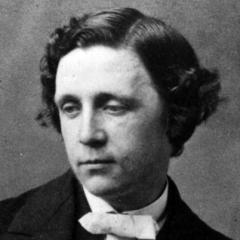
Lewis Carroll
Lewis Carroll

Lewis Carroll, born Charles Lutwidge Dodgson, was an English writer, mathematician, logician, photographer, and children's author. He is best known for his novel Alice's Adventures in Wonderland, which is celebrated for its unique imagination, rich symbolism, and humor. more

You May Also Like

“In 1934, Bill W., cofounder of AA [Alcoholics Anonymous], was treated for his alcoholism with a hallucinogenic belladonna alkaloid. The resulting mystical experience led him to become sober and inspired him to write the book and cofound the organization that have changed the lives of so many millions around the world. In the 1950's Bill W underwent LSD therapy, and found his experience so inspiring that the sought to have the drug made part of the AA program.”

“The lion on the left had advanced all the way to the fence now; its muzzle was touching the boards. It seemed to be grinning at him. Jack backed up another two steps. His head was thudding crazily and he could feel the dry rasp of his breath in his throat. Now the buffalo had moved, circling to the right, behind and around the rabbit. The head was lowered, the green hedge horns pointing at him. The thing was, you couldn't watch all of them. Not all at once.”

“Picture a man in his living room. He is standing at a closed window opposite the fireplace and looking out at the dark night. As the fire starts to burn, the images of the objects in the room behind him can be seen reflected dimly in the window. As more logs burn and the fire in the fireplace illuminates the room, the man now sees a vivid reflection of himself and the contents of the room, which appears to be outside the window. As the analogy is applied to intoxication, the window is the window of our senses to the world, the fire is the electrical excitation in the brain, and the logs are the drugs that dampen (sedatives) or stoke up (stimulants and hallucinogens) the fire. When the fire is stifled, the man will see very little. But when the fire burns brightly, the glass will reflect the furniture in the rooms of his mind—his images, memories, dreams, and fantasies. The brighter the fire—the more [drugs] in the brain—the more vivid the reflections become until some users step through the window, like Alice going through the looking glass, and behave as if the images were real.”