Quotessence
Home / Quotes / Quote by Chinua Achebe

Quote by Chinua Achebe

“People are wrong when they tell you that Conrad was on the side of Africans because his story showed great compassion towards them. Africans are not really served by his compassion, whatever it means; they ask for one thing alone – to be seen for what they are: human beings. Conrad pulls back from granting them this favour in Heart of Darkness.”

Quote by Chinua Achebe

Work

Africa's Tarnished Name

Browse quotes and source details for this work. more

Author
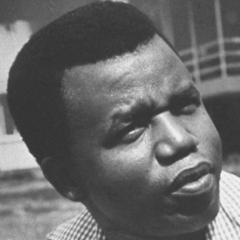
Chinua Achebe
Chinua Achebe

Nigerian novelist, poet, literary critic, widely regarded as one of the greatest African writers of the 20th century. Chinua Achebe is known for his profound insights into colonialism and African culture, with works such as 'Things Fall Apart' and 'Arrow of God'. more

You May Also Like

“La mia idea era di lasciare che la squadra di incatenati scomparisse alla vista prima di salire la collina. Sapete che non sono tenero in modo particolare; ho dovuto colpire e parare colpi. Ho dovuto difendermi e talvolta attaccare - il modo migliore per difendersi - senza calcolarne il costo esatto, secondo le necessità del genere di vita in cui ero incappato. Ho visto il demone della violenza, il demone della cupidigia, e il demone della bramosia bruciante; ma, per gli dèi!, erano demoni forti, vigorosi, dagli occhi ardenti, che scuotevano e trascinavano uomini - uomini, dico. Ma mentre ero su quella collina, previdi che nel sole accecante di quella terra avrei conosciuto un demone floscio, pretenzioso, dagli occhi smorti, di una follia rapace e spietata. Quanto insidioso potesse essere, dovevo impararlo soltanto dopo parecchi mesi e a mille miglia di distanza.”

“He is romantic—romantic,” he repeated. “And that is very bad—very bad. . . . Very good, too,” he added. “But is he?” I queried. ‘“Gewiss,” he said, and stood still holding up the candelabrum, but without looking at me. “Evident! What is it that by inward pain makes him know himself? What is it that for you and me makes him—exist?” ‘At that moment it was difficult to believe in Jim’s existence—starting from a country parsonage, blurred by crowds of men as by clouds of dust, silenced by the clashing claims of life and death in a material world—but his imperishable reality came to me with a convincing, with an irresistible force! I saw it vividly, as though in our progress through the lofty silent rooms amongst fleeting gleams of light and the sudden revelations of human figures stealing with flickering flames within unfathomable and pellucid depths, we had approached nearer to absolute Truth, which, like Beauty itself, floats elusive, obscure, half submerged, in the silent still waters of mystery. “Perhaps he is,” I admitted with a slight laugh, whose unexpectedly loud reverberation made me lower my voice directly; “but I am sure you are.” With his head dropping on his breast and the light held high he began to walk again. “Well—I exist, too,” he said.”

“In the outworks of our lives, we were almost strangers, but we shared a certain outlook on human life and human destiny, which, from the very first, made a bond of extreme strength . . . . At our very first meeting, we talked with continually increasing intimacy. We seemed to sink through layer after layer of what was superficial, till gradually both reached the central fire. It was an experience unlike any other that I have known. We looked into each other's eyes, half appalled and half intoxicated to find ourselves together in such a region. The emotion was as intense as passionate love, and at the same time all-embracing. I came away bewildered, and hardly able to find my way among ordinary affairs.”

“Conrad tillhör de sjömän som får uppleva hur ångan triumferar och seglen försvinner från haven. Han befinner sig mitt inne i ett väldigt maktskifte. En tusenårig tradition bryts och ett helt nytt element förs in. På segelfartyget är det kaptenen och hans män som är förmedlarna mellan Gud och världen. De fångar in och tyglar vinden som driver fartyget framåt. Seglaren lever i nära förbindelse med naturen, som han måste böja sig för, som han betjänar och utnyttjar. När ångan kom, togs makten från kaptenen och gavs åt maskinisten i maskindjupet. Man seglade inte på havet längre utan plöjde sig genom det. Befälet på bryggan flyttades ned, förnedrades, hade blott själva navigeringen kvar och inte kraftöverföringen.”