Quotessence
Home / Authors / Booth Tarkington Books
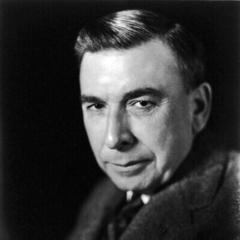
Booth Tarkington

Booth Tarkington Books

Novelist

Penrod

A source page for quotes linked to Booth Tarkington.
0 quotes

Alice Adams

A source page for quotes linked to Booth Tarkington.

0 quotes

Gentle Julia

A source page for quotes linked to Booth Tarkington.

0 quotes

The Turmoil

A source page for quotes linked to Booth Tarkington.

0 quotes

Related Quotes

“But though she was the mistress of her own ways and no slave to any lamp save that of her own conscience, she had a weakness: she had fallen in love with George Amberson Minafer at first sight, and no matter how she disciplined herself, she had never been able to climb out. The thing had happened to her; that was all. George had looked just the way she had always wanted someone to look—the riskiest of all the moonshine ambushes wherein tricky romance snares credulous young love. But what was fatal to Lucy was that this thing having happened to her, she could not change it. No matter what she discovered in George’s nature she was unable to take away what she had given him; and though she could think differently about him, she could not feel differently about him, for she was one of those too faithful victims of glamour. When she managed to keep the picture of George away from her mind’s eye, she did well enough; but when she let him become visible, she could not choose but love what she disdained. She was a little angel who had fallen in love with high-handed Lucifer; quite an experience, and not apt to be soon succeeded by any falling in love with a tamer party—and the unhappy truth was that George did make better men seem tame.”

“All at once the anger ran out of John Harkless; he was a hard man for anger to tarry with. And in place of it a strong sense of home-coming began to take possession of him. He was going home. “Back to Plattville, where I belong,” he had said; and he said it again without bitterness, for it was the truth. “Every man cometh to his own place in the end.” Yes, as one leaves a gay acquaintance of the playhouse lobby for some hard-handed, tried old friend, so he would wave the outer world God-speed and come back to the old ways of Carlow. What though the years were dusty, he had his friends and his memories and his old black brier pipe. He had a girl’s picture that he should carry in his heart till his last day; and if his life was sadder, it was infinitely richer for it. His winter fireside should be not so lonely for her sake; and losing her, he lost not everything, for he had the rare blessing of having known her. And what man could wish to be healed of such a hurt? Far better to have had it than to trot a smug pace unscathed. He had been a dullard; he had lain prostrate in the wretchedness of his loss. “A girl you could put in your hat — and there you have a strong man prone.” He had been a sluggard, weary of himself, unfit to fight, a failure in life and a failure in love. That was ended; he was tired of failing, and it was time to succeed for a while. To accept the worst that Fate can deal, and to wring courage from it instead of despair, that is success; and it was the success that he would have. He would take Fate by the neck. But had it done him unkindness? He looked out over the beautiful, “monotonous” landscape, and he answered heartily, “No!” There was ignorance in man, but no unkindness; were man utterly wise he were utterly kind.”

“Not so long ago as a generation, there was no panting giant here, no heaving, grimy city; there was but a pleasant big town of neighborly people who had understanding of one another, being, on the whole, much of the same type. It was a leisurely and kindly place— “homelike,” it was called — and when the visitor had been taken through the State Asylum for the Insane and made to appreciate the view of the cemetery from a little hill, his host’s duty as Baedeker was done. The good burghers were given to jogging comfortably about in phaetons or in surreys for a family drive on Sunday. No one was very rich; few were very poor; the air was clean, and there was time to live. But there was a spirit abroad in the land, and it was strong here as elsewhere — a spirit that had moved in the depths of the American soil and labored there, sweating, till it stirred the surface, rove the mountains, and emerged, tangible and monstrous, the god of all good American hearts — Bigness. And that god wrought the panting giant.”

“Every new age has at its disposal everything that was fine in all past ages, and its greatness depends on how well it recognizes and preserves and brings to the aid of its own enlightenment whatever worthy and true things the dead have left on earth behind them.”

“While the Growing went on, this god of their market-place was their true god, their familiar and spirit-control. They did not know that they were his helplessly obedient slaves, nor could they ever hope to realize their serfdom (as the first step to becoming free men) until they should make the strange and hard discovery that matter should serve man’s spirit. (p.211)”

“No doubt it is true that there is more rejoicing in heaven over one sinner repented than over all the saints who consistently remain holy, and the rare, sudden gentlenesses of arrogant people have infinitely more effect than the continual gentleness of gentle people. Arrogance turned gentle melts the heart.”

“Gossip is never fatal until it is denied. Gossip goes on about every human being alive and about all the dead that are alive enough to be remembered, and yet almost never does any harm until some defender makes a controversy. Gossip's a nasty thing, but it's sickly, and if people of good intentions will let it entirely alone, it will die, ninety-nine times out of a hundred.”

“I'm not so sure he's wrong about automobiles," he said, "With all their speed forward they may be a step backward for civilization-that is, spiritual civilization ... But automobiles have come, and they bring a greater change in our life than most of us expect. They are here, and almost all outward things are going to be different because of what they bring. They are going to alter war, and they are going to alter peace.”

“My theory on literature is an author who does not indulge in trashiness-writes about people you could introduce into your own home...he did not care to read a book or go to a play about people he would not care to meet at his own dinner table. I believe we should live by certain standards and ideals.”