Quotessence
Home / Authors / Charles Darwin
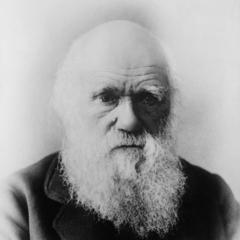
Charles Darwin

Charles Darwin Quotes

Naturalist

Filter quotes by topic

Famous Charles Darwin Quotes

“...Whilst on board the Beagle I was quite orthodox, and I remember being heartily laughed at by several of the officers... for quoting the Bible as an unanswerable authority on some point of morality... But I had gradually come by this time, i.e., 1836 to 1839, to see that the Old Testament from its manifestly false history of the world, with the Tower of Babel, the rainbow at sign, &c., &c., and from its attributing to God the feelings of a revengeful tyrant, was no more to be trusted than the sacred books of the Hindoos, or the beliefs of any barbarian. ...By further reflecting that the clearest evidence would be requisite to make any sane man believe in the miracles by which Christianity is supported, (and that the more we know of the fixed laws of nature the more incredible do miracles become), that the men at that time were ignorant and credulous to a degree almost uncomprehensible by us, that the Gospels cannot be proved to have been written simultaneously with the events, that they differ in many important details, far too important, as it seemed to me, to be admitted as the usual inaccuracies of eyewitnesses; by such reflections as these, which I give not as having the least novelty or value, but as they influenced me, I gradually came to disbelieve in Christianity as a divine revelation. The fact that many false religions have spread over large portions of the earth like wild-fire had some weight with me. Beautiful as is the morality of the New Testament, it can be hardly denied that its perfection depends in part on the interpretation which we now put on metaphors and allegories. But I was very unwilling to give up my belief... Thus disbelief crept over me at a very slow rate, but was at last complete. The rate was so slow that I felt no distress, and have never since doubted even for a single second that my conclusion was correct. I can indeed hardly see how anyone ought to wish Christianity to be true; for if so the plain language of the text seems to show that the men who do not believe, and this would include my Father, Brother and almost all of my friends, will be everlastingly punished. And this is a damnable doctrine.”

“There is grandeur in this view of life, with its several powers, having been originally breathed into a few forms or into one; and that, whilst this planet has gone cycling on according to the fixed law of gravity, from so simple a beginning endless forms most beautiful and most wonderful have been, and are being, evolved.”

“I can indeed hardly see how anyone ought to wish Christianity to be true for if so the plain language of the text seems to show that the men who do not believe, and this would include my father, brother and almost all of my friends, will be everlastingly punished. And this is a damnable doctrine.”

“That there is much suffering in the world no one disputes. Which is more likely, that pain and evil are the result of an all-powerful and good God, or the product of uncaring natural forces? The presence of much suffering agrees well with the view that all organic beings have been developed through variation and natural selection.”

“The assumed instinctive belief in God has been used by many persons as an argument for his existence. But this is a rash argument, as we should thus be compelled to believe in the existence of many cruel and malignant spirits, only a little more powerful than man; for the belief in them is far more general than in a beneficent deity.”

“Another source of conviction in the existence of God, connected with the reason and not with the feelings, impresses me as having much more weight. This follows from the extreme difficulty or rather impossibility of conceiving this immense and wonderful universe, including man with his capacity of looking far backwards and far into futurity, as the result of blind chance or necessity. When thus reflecting I feel compelled to look to a First Cause having an intelligent mind in some degree analogous to that of man; and I deserve to be called a Theist.”

“When it was first said that the sun stood still and world turned round, the common sense of mankind declared the doctrine false; but the old saying of Vox populi, vox Dei [the voice of the people is the voice of God], as every philosopher knows, cannot be trusted in science.”

“How so many absurd rules of conduct, as well as so many absurd religious beliefs, have originated, we do not know; nor how it is that they have become, in all quarters of the world, so deeply impressed on the minds of men; but it is worthy of remark that a belief constantly inculcated during the early years of life, while the brain is impressionable, appears to acquire almost the nature of an instinct; and the very essence of an instinct is that it is followed independently of reason.”

“I am aware that the assumed instinctive belief in God has been used by many persons as an argument for his existence. The idea of a universal and beneficent Creator does not seem to arise in the mind of man, until he has been elevated by long-continued culture.”

“But I own that I cannot see as plainly as others do, and I should wish to do, evidence of design and beneficence on all sides of us. There seems to me too much misery in the world. I cannot persuade myself that a beneficent and omnipotent God would have designedly created that a cat should play with mice.”

“A celebrated author and divine has written to me that he has gradually learned to see that it is just as noble a conception of the Deity to believe that he created a few original forms capable of self-development into other and needful forms, as to believe that he required a fresh act of creation to supply the voids caused by the action of his laws.”

“I am aware that the conclusions arrived at in this work will be denounced by some as highly irreligious; but he who denounces them is bound to show why it is more irreligious to explain the origin of man as a distinct species by descent from some lower from, through the laws of variation and natural selection, than to explain the birth of the individual through the laws of ordinary reproduction. The birth both of the species and of the individual are equally parts of that grand sequence of events, which our minds refuse to accept as the result of blind chance.”