Quotessence
Home / Authors / Charles P. Kindleberger Books
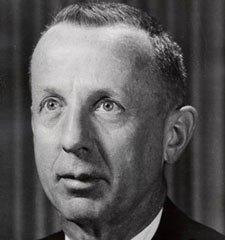
Charles P. Kindleberger

Charles P. Kindleberger Books

Author

Related Quotes

“This book is an essay in what is derogatorily called "literary economics," as opposed to mathematical economics, econometrics, or (embracing them both) the "new economic history." A man does what he can, and in the more elegant - one is tempted to say "fancier" - techniques I am, as one who received his formation in the 1930s, untutored. A colleague has offered to provide a mathematical model to decorate the work. It might be useful to some readers, but not to me. Catastrophe mathematics, dealing with such events as falling off a height, is a new branch of the discipline, I am told, which has yet to demonstrate its rigor or usefulness. I had better wait. Econometricians among my friends tell me that rare events such as panics cannot be dealt with by the normal techniques of regression, but have to be introduced exogenously as "dummy variables." The real choice open to me was whether to follow relatively simple statistical procedures, with an abundance of charts and tables, or not. In the event, I decided against it. For those who yearn for numbers, standard series on bank reserves, foreign trade, commodity prices, money supply, security prices, rate of interest, and the like are fairly readily available in the historical statistics.”

“Debasement was limited at first to one’s own territory. It was then found that one could do better by taking bad coins across the border of neighboring municipalities and exchanging them for good with ignorant common people, bringing back the good coins and debasing them again. More and more mints were established. Debasement accelerated in hyper-fashion until a halt was called after the subsidiary coins became practically worthless, and children played with them in the street, much as recounted in Leo Tolstoy’s short story, Ivan the Fool.”

“What matters to us is the revelation of the swindle, fraud, or defalcation. This makes known to the world that things have not been as they should have been, that it is time to stop and see how they truly are. The making known of malfeasance, whether by the arrest or surrender of the miscreant, or by one of those other forms of confession, flight or suicide, is important as a signal that the euphoria has been overdone. The stage of overtrading may well come to an end. The curtain rises on revulsion, and perhaps discredit.”