Quotessence
Home / Authors / Charles Sanders Peirce
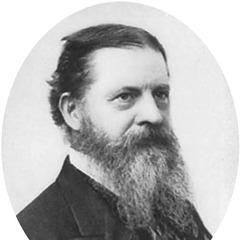
Charles Sanders Peirce

Charles Sanders Peirce Quotes

Philosopher

Filter quotes by topic

Famous Charles Sanders Peirce Quotes

“We cannot begin with complete doubt. We must begin with all the prejudices which we actually have when we enter upon the study ofphilosophy. These prejudices are not to be dispelled by a maxim, for they are things which it does not occur to us can be questioned. A person may, it is true, in the course of his studies, find reason to doubt what he began by believing; but in that case he doubts because he has a positive reason for it, and not on account of the Cartesian maxim. Let us not pretend to doubt in philosophy what we do not doubt in our hearts.”

“It has often been argued that absolute scepticism is self-contradictory; but this is a mistake: and even if it were not so, it would be no argument against the absolute sceptic, inasmuch as he does not admit that no contradictory propositions are true. Indeed, it would be impossible to move such a man, for his scepticism consists in considering every argument and never deciding upon its validity; he would, therefore, act in this way in reference to the arguments brought against him.”

“Theoretically, I grant you, there is no possibility of error in necessary reasoning. But to speak thus "theoretically," is to uselanguage in a Pickwickian sense. In practice, and in fact, mathematics is not exempt from that liability to error that affects everything that man does.”

“It is the man of science, eager to have his every opinion regenerated, his every idea rationalized, by drinking at the fountain of fact, and devoting all the energies of his life to the cult of truth, not as he understands it, but as he does not yet understand it, that ought properly to be called a philosopher.”

“If man were immortal he could be perfectly sure of seeing the day when everything in which he had trusted should betray his trust, and, in short, of coming eventually to hopeless misery. He would break down, at last, as every good fortune, as every dynasty, as every civilization does. In place of this we have death.”

“For example, there are numbers of chemists who occupy themselves exclusively with the study of dyestuffs. They discover facts that are useful to scientific chemistry; but they do not rank as genuine scientific men. The genuine scientific chemist cares just as much to learn about erbium-the extreme rarity of which renders it commercially unimportant-as he does about iron. He is more eager to learn about erbium if the knowledge of it would do more to complete his conception of the Periodic Law, which expresses the mutual relations of the elements.”

“If we are to define science, ... it does not consist so much in knowing, nor even in "organized knowledge," as it does in diligent inquiry into truth for truth's sake, without any sort of axe to grind, nor for the sake of the delight of contemplating it, but from an impulse to penetrate into the reason of things.”