Quotessence
Home / Authors / Charles Sanders Peirce
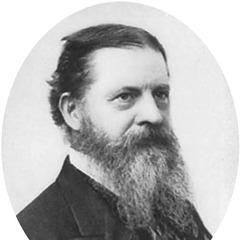
Charles Sanders Peirce

Charles Sanders Peirce Quotes

Philosopher

Filter quotes by topic

Famous Charles Sanders Peirce Quotes

“It is important to understand what I mean by semiosis. All dynamic action, or action of brute force, physical or psychical, either takes place between two subjects, whether they react equally upon each other, or one is agent and the other patient, entirely or partially, or at any rate is a resultant of such actions between pairs. But by "semiosis" I mean, on the contrary, an action, or influence, which is, or involves, a cooperation of three subjects, such as a sign, its object, and its interpretant, this tri-relative influence not being in any way resolvable into actions between pairs.”

“All the followers of science are fully persuaded that the processes of investigation, if only pushed far enough, will give one certain solution to each question to which they can be applied.... This great law is embodied in the conception of truth and reality. The opinion which is fated to be ultimately agreed to by all who investigate is what we mean by the truth, and the object represented in this opinion is the real.”

“I think of consciousness as a bottomless lake, whose waters seem transparent, yet into which we can clearly see but a little way.But in this water there are countless objects at different depths; and certain influences will give certain kinds of those objects an upward influence which may be intense enough and continue long enough to bring them into the upper visible layer. After the impulse ceases they commence to sink downwards.”

“A sign, or representamen, is something which stands to somebody for something in some respect or capacity. It addresses somebody,that is, creates in the mind of that person an equivalent sign, or perhaps a more developed sign. That sign which it creates I call the interpretant of the first sign. The sign stands for something, its object. It stands for that object, not in all respects, but in reference to a sort of idea, which I have sometimes called the ground of the representamen.”