Quotessence
Home / Authors / Edmund Burke
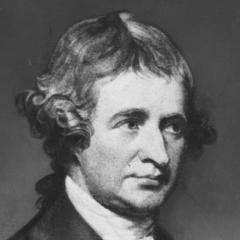
Edmund Burke

Edmund Burke Quotes

Statesman

Filter quotes by topic

Famous Edmund Burke Quotes

“Obstinacy, sir, is certainly a great vice; and in the changeful state of political affairs it is frequently the cause of great mischief. It happens, however, very unfortunately, that almost the whole line of the great and masculine virtues--constancy, gravity, magnanimity, fortitude, fidelity, and firmness--are closely allied to this disagreeable quality, of which you have so just an abhorrence; and in their excess all these virtues very easily fall into it.”

“The liberty I mean is social freedom. It is that state of things in which liberty is secured by the equality of restraint. A constitution of things in which the liberty of no one man, and no body of men, and no number of men, can find means to trespass on the liberty of any person, or any description of persons, in the society. This kind of liberty is, indeed, but another name for justice.”

“By this unprincipled facility of changing the state as often, and as much, and in as many ways as there are floating fancies or fashions, the whole chain and continuity of the commonwealth would be broken. No one generation could link with the other. Men would become little better than the flies of a summer.”

“Society is indeed a contract. Subordinate contracts for objects of mere occasional interest may be dissolved at pleasure - but the state ought not to be considered as nothing better than a partnership agreement in a trade of pepper and coffee, calico, or tobacco, or some other such low concern, to be taken up for a little temporary interest, and to be dissolved by the fancy of the parties. It is to be looked on with other reverence, because it is not a partnership in things subservient only to the gross animal existence of a temporary and perishable nature.”

“All writers on the science of policy are agreed, and they agree with experience, that all governments must frequently infringe the rules of justice to support themselves; that truth must give way to dissimulation, honesty to convenience, and humanity itself to the reigning of interest. The whole of this mystery of iniquity is called the reason of state.”

“When the leaders choose to make themselves bidders at an auction of popularity, their talents, in the construction of the state, will be of no service. They will become flatterers instead of legislators; the instruments, not the guides, of the people.”

“In the weakness of one kind of authority, and in the fluctuation of all, the officers of an army will remain for some time mutinous and full of faction, until some popular general, who understands the art of conciliating the soldiery, and who possesses the true spirit of command, shall draw the eyes of all men upon himself. Armies will obey him on his personal account. There is no other way of securing military obedience in this state of things.”

“In this choice of inheritance we have given to our frame of polity the image of a relation in blood; binding up the constitution of our country with our dearest domestic ties; adopting our fundamental laws into the bosom of our family affections; keeping inseparable and cherishing with the warmth of all their combined and mutually reflected charities, our state, our hearths, our sepulchres, and our altars.”

“"War," says Machiavelli, "ought to be the only study of a prince;" and by a prince he means every sort of state, however constituted. "He ought," says this great political doctor, "to consider peace only as a breathing-time, which gives him leisure to contrive, and furnishes ability to execute military plans." A meditation on the conduct of political societies made old Hobbes imagine that war was the state of nature.”

“In on summer they have done their business... they have completely pulled down to the ground their monarchy, their church, their nobility, their law, their revenue, their army, their navy, their commerce, their arts, and their manufactures... destroyed all balances and counterpoises which serve to fix a state and give it steady direction, and then they melted down the whole into one incongrous mass of mob and democracy... the people, along with their political servitude, have thrown off the yoke of law and morals.”

“We are in a war of a peculiar nature. It is not with an ordinary community, which is hostile or friendly as passion or as interest may veer about: not with a state which makes war through wantonness, and abandons it through lassitude. We are at war with a system, which by its essence, is inimical to all other governments, and which makes peace or war, as peace and war may best contribute to their subversion. It is with an armed doctrine that we are at war. It has, by its essence, a faction of opinion, and of interest, and of enthusiasm, in every country.”

“Reflect how you are to govern a people who think they ought to be free, and think they are not. Your scheme yields no revenue; it yields nothing but discontent, disorder, disobedience; and such is the state of America, that after wading through up to your eyes in blood, you could only end up where you begun; that is, to tax where no revenue is to be found... all is confusion beyond it.”

“I dread our own power, and our own ambition; I dread our being too much dreaded... We may say that we shall not abuse this astonishing, and hitherto unheard-of-power. But every other nation will think we shall abuse it. It is impossible but that, sooner or later, this state of things must produce a combination against us which may end in our ruin.”