Quotessence
Home / Authors / Elliot Perlman Books
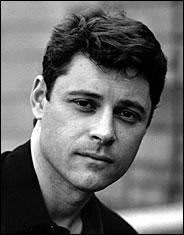
Elliot Perlman

Elliot Perlman Books

Author

Three Dollars

A source page for quotes linked to Elliot Perlman.
0 quotes

Related Quotes

“Everyone was always hungry. The poorer you were, the hungrier you were, and with the hunger came weakness and irritability. It became difficult to think clearly and you needed to think clearly to work out how to survive the next day, how to get food. You were sure you could still work if you could find work, and you could look for it if only you could eat. But how were you going to get food, for yourself, for your children, for your wife or husband, for your parents? There were simply too many people within those walls for the calories that were let in. How were you to get food when there just wasn't enough of it? What were you going to have to do? With hunger of this severity came fatigue, a weakness that transcended tiredness and permeated your sinews and bones. As your limbs got ever lighter, they felt progressively heavier with each new day.”

“Je n'étais même pas libre de pleurer. Qui est jamais libre de pleurer ? Il y a toujours des gens autour, des gens capables de regarder sans le voir un homme sur son chemin de croix, avec sa carrière dans des cartons, mais incapables de supporter le festin visuel d'un homme en pleurs, oui, en pleurs, emporté par l'hiver de son déplaisir. Mais eux non plus, ils n'étaient pas libres d'ingérer le spectacle et de retourner à leurs affaires pour pleurer, de peur que leurs collègues ne les voient en larmes devant leur écran d'ordinateur. Le dernier qui pleurera aura gagné. Nous savons tous ça. Les enfants le tiennent pour un article de foi. Les adultes, eux, ne sont plus en position de le formuler comme tel, mais ils le savent d'instinct. En conclusion, personne n'est libre de pleurer. Personne excepté Tanya. Devant le gare, il m'est apparu que personne n'est réellement libre, pas seulement en matière de larmes, mais en toute chose. Si un évènement ou une situation détermine ou en cause une autre, en quel sens peut-on prétendre que nous sommes libres d'agir ou non ? Si notre comportement est déterminé par toute une série de facteurs, notre structure génétique, la manière dont nous avons été mis au monde, notre perception de l'amour, l'attention et le confort matériel que nous avons connus enfant, jusqu'à notre taux de sucre dans le sang et notre exposition immédiate aux conditions climatiques dominantes, en quoi sommes-nous libres ? Et même si nous pouvions calculer l'effet de tous ces facteurs et prédire notre comportement, nous ne serions toujours pas libres. Car être capable de prédire les évènements futurs ne permet pas pour autant de les influencer si les variables qui les déterminent échappent à notre contrôle.”

“Why did I start with them? Why do any of us choose one company over another as an employer? The money? At the beginning they all offer more or less the same and no one know how it will go after that. I guess it is often not so much your prospects at a particular firm, because these are essentially unknowable, but whether people will think you have done well to get the job there, that determines you choice. That was largely it in my case. It was really the prestige. They gave good letterhead.”

“There's the ambiguity of human relationships, for instance. A relationship between two people, just like a sequence of words, is ambiguous if it is open to different interpretations. And if two people do have differing views about their relationship - I don't just mean about its state, I mean about its very nature - then that difference can affect the entire course of their lives.”

“It's like the smell of burned toast. You made the toast. You looked forward to it. You even enjoyed making it, but it burned. What were you doing? Was it your fault? It doesn't matter anymore. You open the window, but only the very top layer of the smell goes away. The rest remains around you. It's the walls. You leave the room, but it's on your clothes. You change your clothes, but it's in your hair. It's on the thin skin on the tops of your hand. And in the morning, it's still there.”

“Listen- all that she was then, all that she is now, those gestures, everything I remember but won't or can't articulate anymore, the perfect words that are somehow made imperfect when used to describe her and all that should remain unsaid about her- it is all unsupported by reason. I know that. But that enigmatic calm that attaches itself to people in the presence of reason- it's something from which I haven't been able to take comfort, not reliably, not since her.”

“At difficult times of my life, books have been an incredible comfort. When I was 12, I changed schools and my parents split up. It was then that I became addicted to reading. A great writer can attach themselves to your mind and heart, and you feel you understand the world better. As long as you have the capacity to read, you needn't be alone any more. I remember thinking as a child, "If I could give one person the comfort I keep getting from books, then I want to write."”