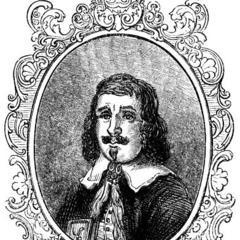
“Be neither too early in the fashion, nor too long out of it, nor too precisely in it; what custom hath civilized is become decent, till then ridiculous; where the eye is the jury thy apparel is the evidence.”
Source: Enchiridion Institutions, Essays and Maxims, political, moral & divine. Divided into four centuries. By Francis Quarles
“The World's a Printing-House, our words, our thoughts,
Our deeds, are characters of several sizes.
Each soul is a Compos'tor, of whose faults
The Levites are Correctors; Heaven Revises.
Death is the common Press, from whence being driven,
We're gather'd, Sheet by Sheet, and bound for Heaven.”
“If opinion hath lighted the lamp of thy name, endeavor to encourage it with thy own oil, lest it go out and stink; the chronical disease of Popularity is shame; if thou be once up, beware; from fame to infamy is a beaten road.”
“Deliberate long before thou consecrate a friend, and when thy impartial justice concludes him worthy of thy bosom, receive him joyfully, and entertain him wisely; impart thy secrets boldly, and mingle thy thoughts with his: he is thy very self; and use him so; if thou firmly think him faithful, thou makest him so.”
“In all thy actions think God sees thee; and in all His actions labor to see Him; that will make thee fear Him; this will move thee to love Him; the fear of God is the beginning of knowledge, and the knowledge of God is the perfection of love.”
Source: Enchiridion Institutions, Essays and Maxims, political, moral & divine. Divided into four centuries. By Francis Quarles
“Think not thy love to God merits God's love to thee; His acceptance of thy duty crowns His own gifts in thee; man's love to God is nothing but a faint reflection of God's love to man.”
Source: Enchiridion Institutions, Essays and Maxims, political, moral & divine. Divided into four centuries. By Francis Quarles
“Of all the difficulties in a state, the temper of a true government most felicifies and perpetuates it; too sudden alterations distemper it. Had Nero tuned his kingdom as he did his harp, his harmony had been more honorable, and his reign more prosperous.”
“There be three sorts of government--monarchical, aristocratical, democratical; and they are apt to fall three several ways into ruin--the first, by tyranny; the second, by ambition; the last, by tumults. A commonwealth grounded upon any one of these is not of long continuance; but, wisely mingled, each guards the other and makes that government exact.”
Source: Enchiridion Institutions, Essays and Maxims, political, moral & divine. Divided into four centuries. By Francis Quarles
“If thou hast no inferiors, have patience awhile, and thou shalt have no superiors. The grave requires no marshal.”
“It is no happiness to live long, nor unhappiness to die soon; happy is he that hath lived long enough to die well.”
Source: Enchiridion Institutions, Essays and Maxims, political, moral & divine. Divided into four centuries. By Francis Quarles
“Even as the needle that directs the hour,
(Touched with the loadstone) by the secret power
Of hidden Nature, points upon the pole;
Even so the wavering powers of my soul,
Touch'd by the virtue of Thy spirit, flee
From what is earth, and point alone to Thee.”
“Knowledge descries; wisdom applies.”
“Mercy turns her back to the unmerciful.”
Source: Enchiridion Institutions, Essays and Maxims, political, moral & divine. Divided into four centuries. By Francis Quarles
“Money is both the generation and corruption of purchased honor; honor is both the child and slave of potent money: the credit which honor hath lost, money hath found. When honor grew mercenary, money grew honorable. The way to be truly noble is to contemn both.”
“Blessedness is promised to the peacemaker, not to the conqueror.”
Source: Enchiridion Institutions, Essays and Maxims, political, moral & divine. Divided into four centuries. By Francis Quarles
“God's pleasure is at the end of our prayers.”
Source: Enchiridon: containing institutions divine, moral
“If God send thee a cross, take it up willingly and follow him. Use it wisely, lest it be unprofitable. Bear it patiently, lest it be intolerable. If it be light, slight it not. If it be heavy, murmur not. After the cross is the crown.”
“Sweet tastes have sour closes; and he repents on thorns that sleeps in beds of roses.”
Source: Emblems, divine and moral, with a sketch of the life and times of the author
“Tis not, to cry God mercy, or to sit
And droop, or to confess that thou hast fail'd:
'Tis to bewail the sins thou didst commit:
And not commit those sins thou hast bewail' d.
He that bewails and not forsakes them too;
Confesses rather what he means to do.”
“Be not too slow in the breaking of a sinful custom; a quick, courageous resolution is better than a gradual deliberation; in such a combat he is the bravest soldier that lays about him without fear or wit. Wit pleads, fear disheartens; he that would kill Hydra had better strike off one neck than five heads: fell the tree, and the branches are soon cut off.”
Source: Enchiridion Institutions, Essays and Maxims, political, moral & divine. Divided into four centuries. By Francis Quarles
“Diogenes found more rest in his tub than Alexander on his throne.”
Source: Enchiridon: containing institutions divine, moral
“Prize not thyself by what thou hast, but by what thou art; he that values a jewel by her golden frame, or a book by her silver clasps, or a man by his vast estate, errs; if thou art not worth more than the world can make thee, thy Redeemer had a bad pennyworth, or thou an uncurious Redeemer.”
Source: Enchiridion Institutions, Essays and Maxims, political, moral & divine. Divided into four centuries. By Francis Quarles
“If thou seest anything in thyself which may make thee proud, look a little further and thou shalt find enough to humble thee; if thou be wise, view the peacock's feathers with his feet, and weigh thy best parts with thy imperfections.”
Source: Enchiridion Institutions, Essays and Maxims, political, moral & divine. Divided into four centuries. By Francis Quarles
“If thou desire to be held wise, be so wise as to hold thy tongue.”
Source: Enchiridion Institutions, Essays and Maxims, political, moral & divine. Divided into four centuries. By Francis Quarles
“Sin is a basilisk whose eyes are full of venom. If the eye of thy soul see her first, it reflects her own poison and kills her; if she see thy soul, unseen, or seen too late, with her poison, she kills thee: since therefore thou canst not escape thy sin, let not thy sin escape thy observation.”
“If any speak ill of thee, flee home to thy own conscience, and examine thy heart: if thou be guilty, it is a just correction; if not guilty, it is a fair instruction: make use of both; so shalt thou distil honey out of gall, and out of an open enemy create a secret friend.”
Source: Enchiridion Institutions, Essays and Maxims, political, moral & divine. Divided into four centuries. By Francis Quarles
“If thy words be too luxuriant, confine them, lest they confine thee; he that thinks he never can speak enough may easily speak too much. A full tongue and an empty brain are seldom parted.”
Source: Enchiridion Institutions, Essays and Maxims, political, moral & divine. Divided into four centuries. By Francis Quarles
“When the flesh presents thee with delights, then present thyself with dangers; where the world possesses thee with vain hopes, there possess thyself with true fear; when the devil brings thee oil, bring thou vinegar. The way to be safe is never to be secure.”
Source: Enchiridion Institutions, Essays and Maxims, political, moral & divine. Divided into four centuries. By Francis Quarles
“We sack, we ransack to the utmost sands
Of native kingdoms, and of foreign lands:
We travel sea and soil; we pry, and prowl,
We progress, and we prog from pole to pole.”
Source: Emblems: Divine and Moral
“The light of the understanding, humility kindleth and pride covereth.”
Source: Poetical Works: And, Quarles' Emblems
“Every man's vanity ought to be his greatest shame; and every man's folly ought to be his greatest secret.”
Source: Enchiridion: Containing Institutions Divine Contemplative Practical: Moral Ethical Oeconomical Political
“Thy pride is but the prologue of thy shame; where vain-glory commands, there folly counsels; where pride rides, there shame lackeys.”
“Though virtue give a ragged livery, she gives a golden cognizance; if her service make thee poor, blush not. Thy poverty may disadvantage thee, but not dishonor thee.”
Source: Enchiridion Institutions, Essays and Maxims, political, moral & divine. Divided into four centuries. By Francis Quarles
“Virtue is nothing but an act of loving that which is to be beloved, and that act is prudence, from whence not to be removed by constraint is fortitude; not to be allured by enticements is temperance; not to be diverted by pride is justice.”
Source: Enchiridion Institutions, Essays and Maxims, political, moral & divine. Divided into four centuries. By Francis Quarles
“What money creates, money preserves: if thy wealth decays, thy honor dies; it is but a slippery happiness which fortunes can give, and frowns can take; and not worth the owning which a night's fire can melt, or a rough sea can drown.”
“O who would trust this world, or prize what's in it,
That gives and takes, and chops and changes, ev'ry minute?”
Source: Emblems divine and moral: together with hieroglyphics of the life of man
“The world is deceitful; her end is doubtful, her conclusion is horrible, her judge terrible, and her judgment is intolerable.”
“My soul, what's lighter than a feather? Wind.
Than wind? The fire. And what than fire? The mind.
What's lighter than the mind? A thought. Than thought?
This bubble world. What than this bubble? Nought.”
Source: Emblems, Divine and Moral: The School of the Heart ; And, Hieroglyphics of the Life of Man
“Poor thieves in halters we behold;
And great thieves in their chains of gold.”
“When two agree in their desire,
One sparke will set them both on fire.”
“The next way home's the farthest way about.”
Source: Emblems, Divine and Moral: Together with Hieroglyphicks of the Life of Man
“If thou desire to purchase honor with thy wealth, consider first how that wealth became thine; if thy labor got it, let thy wisdom keep it; if oppression found it, let repentance restore it; if thy parent left it, let thy virtues deserve it; so shall thy honor be safer, better and cheaper.”
“Nothing is more pleasing to God than an open hand, and a closed mouth.”
Source: Uniform with the Enchiridion: Spare Minutes Or Resolved Meditations and Premeditated Resolutions
“I see no virtue where I smell no sweat.”
Source: Emblems: Divine and Moral
“Read not books alone, but men, and amongst them chiefly thyself.”
Source: Enchiridion Institutions, Essays and Maxims, political, moral & divine. Divided into four centuries. By Francis Quarles
“Becoming fearless isn't the point. That's impossible. It's learning how to control your fear, how to be free from it, that's the point. Necessity of action takes away the fear of the act, and makes bold resolution the favorite of fortune.”
“In the height of thy prosperity expect adversity, but fear it not. If it come not, thou art the more sweetly possessed of the happiness thou hast, and the more strongly confirmed. If it come, thou art the more gently dispossessed of the happiness thou hadst, and the more firmly prepared.”
Source: Enchiridion Institutions, Essays and Maxims, political, moral & divine. Divided into four centuries. By Francis Quarles
“If thou be rich, strive to command thy money, lest it command thee.”
“If thou desire not to be poor, desire not to be too rich. He is rich, not that possesses much, but he that covets no more; and he is poor, not that enjoys little, but he that wants too much. The contented mind wants nothing which it hath not; the covetous mind wants, not only what it hath not, but likewise what it hath.”
Source: Enchiridion Institutions, Essays and Maxims, political, moral & divine. Divided into four centuries. By Francis Quarles
“In thy apparel avoid singularity, profuseness, and gaudiness. Be not too early in the fashion, nor too late. Decency is half way between affectation and neglect. The body is the shell of the soul, apparel is the husk of that shell; the husk often tells you what the kernel is.”
Source: Enchiridion Institutions, Essays and Maxims, political, moral & divine. Divided into four centuries. By Francis Quarles