Quotessence
Home / Authors / Graham Hancock
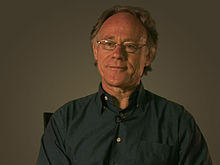
Graham Hancock

Graham Hancock Quotes

Writer

Filter quotes by topic

Famous Graham Hancock Quotes

“Quetzalcoatl, the Feathered Serpent, [...] came to teach [the ancient inhabitants of Mexico] the benefits of settled agriculture and the skills necessary to build temples. Although this deity is frequently depicted as a serpent, he is more often shown in human form--the serpent being his symbol and his alter ego--and is usually described as "a tall bearded white man" ... "a mysterious person ... a white man with a strong formation of body, broad forehead, large eyes and a flowing beard." Indeed, [...] the attributes and life history of Quetzalcoatl are so human that it is not improbable that he may have been an actual historical character ... the memory of whose benefactions lingered after his death, and whose personality was eventually deified. The same could very well be said of Oannes--and just like Oannes at the head of the Apkallu (likewise depicted as prominently bearded) it seems that Quetzalcoatl traveled with his own brotherhood of sages and magicians. We learn that they arrived in Mexico "from across the sea in a boat that moved by itself without paddles," and that Quetzalcoatl was regarded as having been "the founder of cities, the framer of laws and the teacher of the calendar.”

“Figurines of Apkallus were buried in boxes in the foundation deposits in Mesopotamian buildings in order to avert evil ... The term massare, Watchers, is used of these sets. Likewise the Apkallus were said to have taught antediluvian sciences to humanity and so, too, were the Watchers. As one scholar concludes, however: 'The Jewish authors often inverted the Mesopotamian intellectual traditions with the intention of showing the superiority of their own cultural foundations. [Thus] ... the antediluvian sages, the Mesopotamian Apkallus, were demonised as the 'sons of God' and ... appear as the Watchers ... illegitimate teachers of humankind before the flood.”

“The fullest account we have of Oannes is found in surviving fragments of the works of a Babylonian priest called Berossos who wrote in the third century BC. [...] Oannes did not do his work alone but was supposedly the leader of a group of beings known as the Seven Apkallu--the "Seven Sages"--who were said to have lived "before the flood" (a cataclysmic global deluge features prominently in many Mesopotamian traditions, including those of Sumer, Akkad, Assyria and Babylon). Alongside Oannes, these sages are portrayed as bringers of civilization who, in the most ancient past, gave humanity a moral code, arts, crafts and agriculture and taught them architectural, building and engineering skills.”

“Berossos compiled his History from the temple archives of Babylon (reputed to have contained "public records" that had been preserved for "over 150,000 years"). He has passed on to us a description of Oannes as a "monster," or a "creature." However, what Berossos has to say is surely more suggestive of a man wearing some sort of fish-costume--in short, some sort of disguise. The monster, Berossos tells us: "had the whole body of a fish, but underneath and attached to the head of the fish there was another head, human, and joined to the tail of the fish, feet like those of a man, and it had a human voice ... At the end of the day, this monster, Oannes, went back to the sea and spent the night. It was amphibious, able to live both on land and in the sea ... Later, other monsters similar to Oannes appeared." Bearing in mind that the curious containers carried by Oannes and the Apkallu sages are also depicted on one of the megalithic pillars at Göbekli Tepe (and [...] as far afield as ancient Mexico as well), what are we to make of all this? The mystery deepends when we follow the Mesopotamian traditions further. In summary, Oannes and the brotherhood of Apkallu sages are depicted as tutoring mankind for many thousands of years. It is during this long passage of time that the five antediluvian cities arise, the centers of a great civilization, and that kingship is "lowered from heaven." Prior to the first appearance of Oannes, Berossos says, the people of Mesopotamia 'lived in a lawless manner, like the beasts of a field.”

“Another point of interest about the Tiahuanaco [in Bolivia] monoliths is that their garments from the waist down are patterned in the form of fish scales. Here, too, is a parallel to the Apkallus--the bearded, "fish-garbed figures" who brought high civilization to Mesopotamia [...]. Nor is it as though bearded figures are missing from the repertoire of Tiahuanaco. Two have survived, and one on the pillar in the semi-subterranean temple has been identified since time immemorial with the great civilizing deity Kon-Tiki Viracocha, [...] who is described in multiple myths and traditions as being white skinned and bearded.”

“Legends speak of a primeval Pacific homeland called "Hiva" from which the first inhabitants of Easter Island came--a homeland that also fell victim to the "mischief of Uoke's lever" and was "submerged under the sea." What is particularly intriguing about all this, because of its resonance with the Seven Sages--the Apkallu--spoken of in Mesopotamian antediluvian traditions, and with the Seven Sages of the Edfu Building Texts, who sought out new lands in which to recreate the drowned and devastated world of the gods, is that the Seven Sages--"king's sons, all initiated men"--are also said to have been instrumental in the original settlement of Easter Island. Exactly as was the case with the Apkallu, who laid the foundations of all the future temples of Mesopotamia, and with the Edfu Sages who traveled the length and breath of Egypt establishing the sacred mounds on which all future pyramids and temples were to be built, the first task of the Seven Sages from Hiva after their arrival on Easter Island was 'the construction of stone mounds.”

“Like the legends of Kon-Tiki Viracocha [...], the South American civilizing hero, white-skinned and bearded like Quetzalcoatl and the Apkallu sages [...], who was said to have come to the Andes during a terrifying period, thousands of years in the past, "when the earth had been inundated by a great flood and plunged into darkness by the disappearance of the sun." (Exactly like Quetzalcoatl in Mexico, and the Apkallu sages in Mesopotamia, Viracocha's civilizing mission in the Andes had been to bring laws and a moral code to the survivors of the disaster, and to teach them the skills of agriculture, architecture and engineering.”