Quotessence
Home / Authors / H. Rider Haggard Books
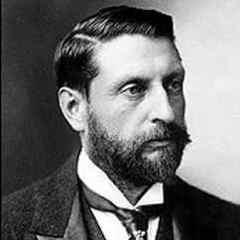
H. Rider Haggard

H. Rider Haggard Books

Writer

She

A source page for quotes linked to H. Rider Haggard.
0 quotes

Allan Quatermain

A source page for quotes linked to H. Rider Haggard.

0 quotes

Moon of Israel

A source page for quotes linked to H. Rider Haggard.

0 quotes

Morning Star

A source page for quotes linked to H. Rider Haggard.

0 quotes

Related Quotes

“Though the face before me was that of a young woman of certainly not more than thirty years, in perfect health and the first flush of ripened beauty, yet it bore stamped upon it a seal of unutterable experience, and of deep acquaintance with grief and passion. Not even the slow smile that crept about the dimples of her mouth could hide the shadow of sin and sorrow. It shone even in the light of those glorious eyes, it was present in the air of majesty, and it seemed to say: 'Behold me, lovely as no woman was or is, undying and half-divine; memory haunts me from age to age, and passion leads me by the hand--evil have I done, and with sorrow have I made acquaintance from age to age, and from age to age evil shall I do, and sorrow shall I know till my redemption comes.”

“The moon went slowly down in loveliness; she departed into the depth of the horizon, and long veil-like shadows crept up the sky through which the stars appeared. Soon, however, they too began to pale before a splendour in the east, and the advent of the dawn declared itself in the newborn blue of heaven. Quieter and yet more quiet grew the sea, quiet as the soft mist that brooded on her bosom, and covered up her troubling, as in our tempestuous life the transitory wreaths of sleep brook upon a pain-racked soul, causing it to forget its sorrow. From the east to the west sped those angels of the Dawn, from sea to sea, from mountain-top to mountain-top, scattering light from breast and wing. On they sped out of the darkness, perfect, glorious; on, over the quiet sea, over the low coast-line, and the swamps beyond, and the mountains above them; over those who slept in peace and those who woke in sorrow; over the evil and the good; over the living and the dead; over the wide world and all that breathes or as breathed thereon.”

“Listen! What is life? It is a feather, it is the seed of the grass, blown hither and thither, sometimes multiplying itself and dying in the act, sometimes carried away into the heavens. But if that seed be good and heavy it may perchance travel a little way on the road it wills. It is well to try and journey one's road and to fight with the air. Man must die. At the worst he can but die a little sooner.”

“Yet man dies not whilst the world, at once his mother and his monument, remains. His name is lost, indeed, but the breath he breathed still stirs the pine-tops on the mountains, the sound of the words he spoke yet echoes on through space; the thoughts his brain gave birth to we have inherited to-day; his passions are our cause of life; the joys and sorrows that he knew are our familiar friends--the end from which he fled aghast will surely overtake us also! Truly the universe is full of ghosts, not sheeted churchyard spectres, but the inextinguishable elements of individual life, which having once been, can never die, though they blend and change, and change again for ever.”

“It is a hard thing when one has shot sixty-five lions or more, as I have in the course of my life, that the sixty-sixth should chew your leg like a quid of tobacco. It breaks the routine of the thing, and putting other considerations aside, I am an orderly man and don't like that. This is by the way.”

“It is far. But there is no journey upon this earth that a man may not make if he sets his heart to it. There is nothing, Umbopa, that he cannot do, there are no mountains he may not climb, there are no deserts he cannot cross; save a mountain and a a desert of which you are spared the knowledge, if love leads him and he holds his life in his hand counting it as nothing, ready to keep it or to lose it as Providence may order.”

“Man doeth this and doeth that from the good or evil of his heart; but he knows not to what end his sense doth prompt him; for when he strikes he is blind to where the blow shall fall, nor can he count the airy threads that weave the web of circumstance. Good and evil, love and hate, night and day, sweet and bitter, man and woman, heaven above and the earth beneath--all those things are needful, one to the other, and who knows the end of each?”

“Man's cleverness is almost indefinite, and stretches like an elastic band, but human nature is like an iron ring. You can go round and round it, you can polish it highly, you can even flatten it a little on one side, whereby you will make it bulge out the other, but you will NEVER, while the world endures and man is man, increase its total circumference.”