Quotessence
Home / Authors / Herman Melville
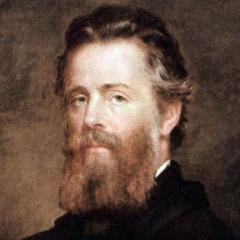
Herman Melville

Herman Melville Quotes

Novelist

Filter quotes by topic

Famous Herman Melville Quotes

“There is no figure more common in scripture, and none more beautiful, than that by which Christ is likened unto light. Incomprehensible in its nature, itself the first visible, and that by which all things are seen, light represents to us Christ. Whose generation none can declare, but Who must shine upon us ere we can know aught aright, whether of things Divine or human.”

“Those peculiar social sensibilities nourished by our own peculiar political principles, while they enhance the true dignity of a prosperous American, do but minister to the added wretchedness of the unfortunate; first, by prohibiting their acceptance of what little random relief charity may offer; and, second, by furnishing them with the keenest appreciation of the smarting distinction between their ideal of universal equality and their grind-stone experience of the practical misery and infamy of poverty.”

“When the inhabitants of some sequestered island first descry the "big canoe" of the European rolling through the blue waters towards their shores, they rush down to the beach in crowds, and with open arms stand ready to embrace the strangers. Fatal embrace! They fold to their bosoms the vipers whose sting is destined to poison all their joys; and the instinctive feeling of love within their breasts is soon converted into the bitterest hate.”

“For the profit of travel: in the first place, you get rid of a few prejudices.... The prejudiced against color finds several hundred millions of people of all shades of color, and all degrees of intellect, rank, and social worth, generals, judges, priests, and kings, and learns to give up his foolish prejudice.”

“That hour in the life of a man when first the help of humanity fails him, and he learns that in his obscurity and indigence humanity holds him a dog and no man: that hour is a hard one, but not the hardest. There is still another hour which follows, when he learns that in his infinite comparative minuteness and abjectness, the gods do likewise despise him, and own him not of their clan.”

“Why is almost every robust healthy boy with a robust healthy soul in him, at some time or other crazy to go to sea? Why upon your first voyage as a passenger, did you yourself feel such a mystical vibration, when first told that you and your ship were now out of sight of land? Why did the old Persians hold the sea holy? Why did the Greeks give it a separate deity, and own brother of Jove? Surely all this is not without meaning.”

“The pulpit is ever this earth's foremost part; all the rest comes in its rear; the pulpit leads the world. From thence it is the storm of God's quick wrath is first descried, and the bow must bearthe earliest brunt. From thence it is the God of breezes fair or foul is first invokedfor favorable winds. Yes, the world's a ship on its passage out, and not a voyage complete; and the pulpit is its prow.”

“It is often to be observed, that as in digging for precious metals in the mines, much earthly rubbish has first to be troublesomely handled and thrown out ; so, in digging in one s soul for the fine gold of genius, much dulness and common-place is first brought to light. Happy would it be, if the man possessed in himself some receptacle for his own rubbish of this sort: but he is like the occupant of a dwelling, whose refuse cannot be clapped into his own cellar, but must be deposited in the street before his own door, for the public functionaries to take care of.”

“The late John Jacob Astor, a personage little given to poetic enthusiasm, had no hesitation in pronouncing my first grand point to be prudence; my next, method. I do not speak it in vanity, but simply record the fact, that I was not unemployed in my profession by the late John Jacob Astor; a name which, I admit, I love to repeat, for it hath a rounded and orbicular sound to it, and rings like unto bullion. I will freely add, that I was not insensible to the late John Jacob Astor's good opinion.”