Quotessence
Home / Authors / Hugo Black
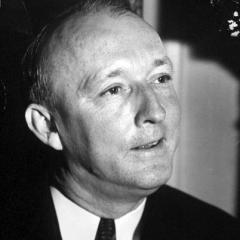
Hugo Black

Hugo Black Quotes

Former Associate Justice of the Supreme Court of the United States

Filter quotes by topic

Famous Hugo Black Quotes

“From the very beginning, our state and national constitutions and laws have laid great emphasis on procedural and substantive safeguards designed to assure fair trials before impartial tribunals in which every defendant stands equal before the law. This noble ideal cannot be realized if the poor man charged with crime has to face his accusers without a lawyer to assist him.”

“Compelling a man by law to pay his money to elect candidates or advocate law or doctrines he is against differs only in degree, if at all, from compelling him by law to speak for a candidate, a party, or a cause he is against. The very reason for the First Amendment is to make the people of this country free to think, speak, write and worship as they wish, not as the Government commands.”

“The First Amendment's language leaves no room for inference that abridgments of speech and press can be made just because they are slight. That Amendment provides, in simple words, that "Congress shall make no law . . . abridging the freedom of speech, or of the press." I read "no law . . . abridging" to mean no law abridging.”

“The word 'security' is a broad, vague generality whose contours should not be invoked to abrogate the fundamental law embodied in the First Amendment. The guarding of military and diplomatic secrets at the expense of informed representative government provides no real security.”

“The "establishment of religion" clause of the First Amendment means at least this: Neither a state nor the Federal Government can set up a church. Neither can pass laws which aid one religion, aid all religions, or prefer one religion over another. Neither can force nor influence a person to go to or to remain away from church against his will or force him to profess a belief or disbelief in any religion.”

“In my judgment the people of no nation can lose their liberty so long as a Bill of Rights like ours survives and its basic purposes are conscientiously interpreted, enforced and respected so as to afford continuous protection against old, as well as new, devices and practices which might thwart those purposes. I fear to see the consequences of the Court's practice of substituting its own concepts of decency and fundamental justice for the language of the Bill of Rights as its point of departure in interpreting and enforcing that Bill of Rights.”

“No higher duty, or more solemn responsibility, rests upon this Court than that of translating into living law and maintaining this constitutional shield deliberately planned and inscribed for the benefit of every human being subject to our Constitution - of whatever race, creed or persuasion.”

“We repeat and again reaffirm that neither a State nor the Federal Government can constitutionally force a person "to profess a belief or disbelief in any religion." Neither can constitutionally pass laws or impose requirements which aid all religions as against nonbelievers, and neither can aid those religions based on a belief in the existence of God as against those religions founded on different beliefs.”