Quotessence
Home / Authors / Jincy Willett Books
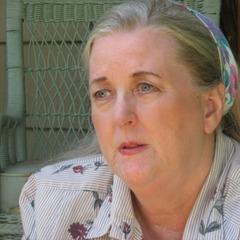
Jincy Willett

Jincy Willett Books

Author

Amy Falls Down

A source page for quotes linked to Jincy Willett.
0 quotes

Related Quotes

“Once, before leaving on vacation, I copied an entire page from an Alice Munro story and left it in my typewriter, hoping a burglar might come upon it and mistake her words for my own. That an intruder would spend his valuable time reading, that he might be impressed by the description of a crooked face, was something I did not question, as I believed, and still do, that stories save you.”

“Jenny Marzen made millions of dollars, as opposed to nickels, by writing novels that got seriously reviewed while selling big. Amy had skimmed her first one, a mildly clever thing about a philosophy professor who discovers her husband is cheating on her with one of her grad students, and who, while feigning ignorance of the affair, drives the girl mad with increasingly brutal critiques and research tasks, at one point banishing her to Beirut, first to learn fluent Arabic and then to read Avicenna's Al-Qanun fi al-Tibb, housed in the American University. This was, Amy thought, a showoffy detail that hinted at Marzen's impressive erudition but was probably arrived at within five Googling minutes.”

“Hester Lipp had written Where the Sidewalk Starts, an inexplicably acclaimed book of memoir, recounting — in severe language and strange, striking imagery — Lipp's childhood and adolescence on a leafy suburban street in Burlington. Her house was large and well-kept, her schooling uneventful, her family — the members of which she described in scrupulous detail — uniformly decent and supportive. Sidewalk was blurbed as a devastatingly honest account of what it meant to grow up middle class in America. Amy, who forced herself to read the whole thing, thought the book devastatingly unnecessary. The New York Times had assigned it to her for a review, and she stomped on it with both feet. Amy's review of Sidewalk was the only mean-spirited review she ever wrote. She had allowed herself to do this, not because she was tired of memoirs, baffled by their popularity, resentful that somehow, in the past twenty years, fiction had taken a backseat to them, so that in order to sell clever, thoroughly imagined novels, writers had been browbeaten by their agents into marketing them as fact. All this annoyed her, but then Amy was annoyed by just about everything. She beat up on Hester Lipp because the woman could write up a storm and yet squandered her powers on the minutiae of a beige conflict-free life. In her review, Amy had begun by praising what there was to praise about Hester's sharp sentences and word-painting talents and then slipped, in three paragraphs, into a full-scale rant about the tyranny of fact and the great advantages, to both writer and reader, of making things up. She ended by saying that reading Where the Sidewalk Starts was like "being frog-marched through your own backyard.”

“Jenny Marzen is who again?" Amy knew perfectly well who she was. Jenny Marzen was hot, hotter than Amy had ever been, and Jenny Marzen would be washed up in ten years and didn't know it. "And Jenny is my number one fan?" "No, but she likes you. She read your stories in grad school." "What is she, twelve?" "The point is, she really liked the article, and all that stuff about experience and news. Lex says she says you've got gravitas." "That's a dirty lie. I never even had mono.”

“You might ask yourself why you want to surprise your readers in the first place. A surprise ending is sort of like a surprise party. Probably some people, somewhere, enjoy having friends and trusted colleagues lunge at them in the sudden blinding light of their own living room, but I don't think most of us do.”

“Reading was not an escape for her, any more than it is for me. It was an aspect of direct experience. She distinguished, of course, between the fictional world and the real one, in which she had to prepare dinners and so on. Still, for us, the fictional world was an extension of the real, and in no way a substitute for it, or refuge from it. Any more than sleeping is a substitute for waking." (Jincy Willett)”