Quotessence
Home / Authors / John Medina
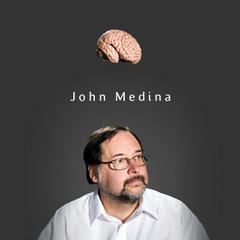
John Medina

John Medina Quotes

Molecular Biologist

Filter quotes by topic

Famous John Medina Quotes

“Why is it important to forget? Forgetting plays a vital role in our ability to function for a deceptively simple reason. Forgetting allows us to prioritise. Anything irrelevant to our survival will take up wasteful cognitive space if we assign it the same priority as events critical to our survival.”

“Are you a lark, an owl or a hummingbird? Lark, also called early chronotype, is someone who does usually wake up very early. They are most active during morning around 6:00 am. Approximately 10% of people are larks. Owl, also called late chronotype, is someome who does usually wake up very late. They are most active in the evening around 6:00 pm. They usually drink a lot of coffee and accumulate a massive sleep debt as they go through life. Approximately 10% of people are owls. The rest, around 80% of people, are hummingbirds. Some hummingbirds are more larkish, some more owlish and some are in between.”

“Is there something to the notion "Let me sleep on it."? Mountains of data says there is. For example, Mendeleyev - the creator of the Periodic Table of Elements - says that he came up with this idea in his sleep. Contemplating the nature of the universe while playing Solitaire one evening, he nodded off. When he awoke, he knew how all the atoms in the universe were organised, and he promptly created his famous table. Interestingly, he organised the atoms in repeating groups of seven, just the way you play Solitaire.”

“Lark, also called early chronotype, is someone who does usually wake up very early. They are most active during morning around 6:00 am. Approximately 10% of people are larks. Owl, also called late chronotype, is someome who does usually wake up very late. They are most active in the evening around 6:00 pm. They usually drink a lot of coffee and accumulate a massive sleep debt as they go through life. Approximately 10% of people are owls. The rest, around 80% of people, are hummingbirds. Some hummingbirds are more larkish, some more owlish and some are in between.”

“The brain processes meaning before detail. Providing the gist, the core concept, first was like giving a thirsty person a tall glass of water. And the brain likes hierarchy. Starting with general concepts naturally leads to explaining information in a hierarchical fashion. You have to do the general idea first. And then you will see that 40 percent improvement in understanding.”

“The ability to double our biomass - not by waiting several million years and growing to be the size of an elephant - but waiting a few hundred thousand years for neurons to sprout into our brains - ones capable of having us create emotional relationships with other members of our species. We thereby double our biomass not by getting bigger, but by creating an ally.”

“There is a neuron in your brain that will respond only to pictures of Jennifer Aniston - provided you have had prior visual exposure to the actress. That neuron does not respond to pictures of Bill Clinton or Halle Berry. Only Jennifer. I used the story to explain the almost ridiculous plasticity of the organ. There is no such thing as Jennifer Aniston in our evolutionary history - she was born in 1969, for heaven's sake - but we are flexible enough to devote an entire cell to her if we have previously encountered her in some fashion.”

“Most brain scientists have not taught 4th grade, and don't know very much about the classroom, even though they might study learning in some detail. Most education professionals, who often know a tremendous amount about the classroom, don't know much about the brain. That is one of the reasons why I am so skeptical about applying brain findings to the classroom.”

“If you wanted to create an education environment that was directly opposed to what the brain was good at doing, you probably would design something like a classroom. If you wanted to create a business environment that was directly opposed to what the brain was good at doing, you probably would design something like a cubicle. And if you wanted to change things, you might have to tear down both and start over.”

“The brain cannot multitask. Multitasking, when it comes to paying attention, is a myth. The brain naturally focuses on concepts sequentially, one at a time…To put it bluntly, research shows that we can’t multitask. We are biologically incapable of processing information-rich inputs simultaneously…Studies show that a person who is interrupted takes 50 percent longer to accomplish a task. Not only that, he or she makes up to 50 percent more errors.”