Quotessence
Home / Authors / John Stuart Mill
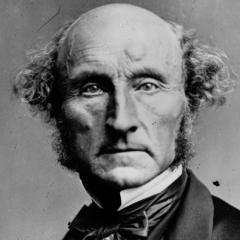
John Stuart Mill

John Stuart Mill Quotes

Philosopher

Filter quotes by topic

Famous John Stuart Mill Quotes

“The prevailing tendency to regard all the marked distinctions of human character as innate, and in the main indelible, and to ignore the irresistible proofs that by far the greater part of those differences, whether between individuals, races, or sexes are such as not only might but naturally would be produced by differences in circumstances, is one of the chief hinderances to the rational treatment of great social questions, and one of the greatest stumbling blocks to human improvement.”

“In proportion as the people are accustomed to manage their affairs by their own active intervention, instead of leaving them to the government, their desires will turn to repelling tyranny, rather than to tyrannizing: while in proportion as all ready initiative and direction resides in the government, and individuals habitually feel and act as under its perpetual tutelage, popular institutions develop in them not the desire of freedom, but an unmeasured appetite for place and power.”

“In proportion to the development of his individuality, each person becomes more valuable to others. There is a greater fullness of life about his own existence, and when there is more life in the units there is more in the mass which is composed of them.”

“A people may prefer a free government, but if by momentary discouragement or temporary panic, or a fit of enthusiasm for an individual, they can be induced to lay their liberties at the feet of even a great man, or trust him with powers to subvert their institutions, in all these cases they are unfit for liberty.”

“Persons of genius are, ex vi termini, more individual than any other people - less capable, consequently, of fitting themselves, without hurtful compression, into any of the small number of moulds which society provides in order to save its members the trouble of forming their character.”

“In all the more advanced communities the great majority of things are worse done by the intervention of government than the individuals most interested in the matter would do them, or cause them to be done, if left to themselves.”

“The doctrine called Philosophical Necessity is simply this: that, given the motives which are present to an individual's mind, and given likewise the character and disposition of the individual, the manner in which he will act might be unerringly inferred: that if we knew the person thoroughly, and knew all the inducements which are acting upon him, we could foretell his conduct with as much certainty as we can predict any physical event.”