Quotessence
Home / Authors / Joseph Story
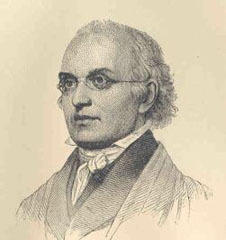
Joseph Story

Joseph Story Quotes

Former Associate Justice of the Supreme Court of the United States

Filter quotes by topic

Famous Joseph Story Quotes

“A government, forever changing and changeable, is, indeed, in a state bordering upon anarchy and confusion.”

“The powers not delegated to the United States by the Constitution, nor prohibited by it to the States, are reserved to the States respectively, or to the people.”

“It yet remains a problem to be solved in human affairs, whether any free government can be permanent, where the public worship of God, and the support of religion, constitute no part of the policy or duty of the state in any assignable shape. The future experience of Christendom, and chiefly of the American states, must settle this problem, as yet new in the history of the world, abundant, as it has been, in experiments in the theory of government.”

“[I]t is impossible for those, who believe in the truth of Christianity, as a divine revelation, to doubt, that it is the especial duty of government to foster, and encourage it among all the citizens and subjects. This is a point wholly distinct from that of the right of private judgment in matters of religion, and of the freedom of public worship according to the dictates of one's conscience.”

“The militia is the natural defense of a free country against sudden foreign invasions, domestic insurrections, and domestic usurpations of power by rulers. It is against sound policy for a free people to keep up large military establishments and standing armies in time of peace, both from the enormous expenses, with which they are attended, and the facile means, which they afford to ambitious and unprincipled rulers, to subvert the government, or trample upon the rights of the people.”

“So that the executive and legislative branches of the national government depend upon, and emanate from the states. Every where the state sovereignties are represented; and the national sovereignty, as such, has no representation.”

“The state governments have a full superintendence and control over the immense mass of local interests of their respective states, which connect themselves with the feelings, the affections, the municipal institutions, and the internal arrangements of the whole population. They possess, too, the immediate administration of justice in all cases, civil and criminal, which concern the property, personal rights, and peaceful pursuits of their own citizens.”

“In the next place, the state governments are, by the very theory of the constitution, essential constituent parts of the general government. They can exist without the latter, but the latter cannot exist without them.”

“Men, to act with vigour and effect, must have time to mature measures, and judgment and experience, as to the best method of applying them. They must not be hurried on to their conclusions by the passions, or the fears of the multitude. They must deliberate, as well as resolve.”

“How much more do they deserve our reverence and praise, whose lives are devoted to the formation of institutions, which, when they and their children are mingled in the common dust, may continue to cherish the principles and the practice of liberty in perpetual freshness and vigour.”

“It was under a solemn consciousness of the dangers from ecclesiastical ambition, the bigotry of spiritual pride, and the intolerance of sects... that is was deemed advisable to exclude from the national government all power to act upon the subject.”

“The duty imposed upon him [the president] to take care that the laws be faithfully executed, follows out the strong injunctions of his oath of office, that he will 'preserve, protect, and defend the Constitution.' The great object of the executive department is to accomplish this purpose; and without it, be the form of government whatever it may, it will be utterly worthless for offence or defense; for the redress of grievances or the protection of rights; for the happiness, or good order, or safety of the people.”

“The real object of the First Amendment was not to countenance, much less advance Mohammedanism, or Judaism or infidelity, by prostrating Christianity; but ... to prevent any national ecclesiastical establishment which should give to a hierarchy the exclusive patronage of the national government.”

“A feeble execution is but another phrase for a bad execution; and a government ill executed, whatever may be its theory, must, in practice, be a bad government.”

“One of the ordinary modes, by which tyrants accomplish their purposes without resistance, is, by disarming the people, and making it an offence to keep arms, and by substituting a regular army in the stead of a resort to the militia. The friends of a free government cannot be too watchful, to overcome the dangerous tendency of the public mind to sacrifice, for the sake of mere private convenience, this powerful check upon the designs of ambitious men.”