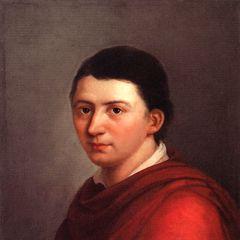
“The whole history of modern poetry is a continuous commentary on the short text of philosophy: every art should become science, and every science should become art; poetry and philosophy should be united.” ShouldArtPhilosophyWholePoetryUnitedModernPoetPhilosophicalPoetry IsCommentaryModern Poetry Author:Karl Wilhelm Friedrich Schlegel
“Without poetry, religion becomes obscure, false, and malignant; without philosophy, licentious in all wantonness, and lascivious to the point of self-castration.” SelfPhilosophyPoetryReligionPoetPhilosophicalObscureCastration Author:Karl Wilhelm Friedrich Schlegel
“If one believes philosophers, then what we call religion is only a deliberately popularized or an instinctively artless philosophy. Poets seem to consider religion rather as a variation of poetry which by misjudging its proper beautiful game takes itself too seriously and one-sidedly. Philosophy, however, admits and recognizes that it can begin and complete itself only with religion. Poetry seeks only to strive for the infinite and despises worldly utility and culture, which are the true antitheses of religion. Eternal peace among artists is thus not far away.” IfsBelievePhilosophySeemsBeautifulPoetryArtistReligionCultureGamesPoetEternalPhilosophicalInfiniteStrivePhilosopherDespiseFar AwayWorldlyUtilityVariationAntithesisEternal Peace Author:Karl Wilhelm Friedrich Schlegel
“Poetry and philosophy are, according to how you take them, different spheres, different forms, or factors of religion. Try to really combine both, and you will have nothing but religion.” TryingDifferentPhilosophyFormPoetryReligionPoetPhilosophicalFactorsSpheres Author:Karl Wilhelm Friedrich Schlegel
“Where philosophy ends, poetry must commence. There should not be a common point of view, a natural manner of thinking which standsin contrast to art and liberal education, or mere living; that is, one should not conceive of a realm of crudeness beyond the boundaries of education. Every conscious link of an organism should not perceive its limits without a feeling for its unity in relation to the whole. For example, philosophy should not only be contrasted to non-philosophy, but also to poetry.” ThinkingShouldArtEndsPhilosophyWholeFeelingsPoetryNaturalViewsCommonExamplePoetLimitsConsciousRelationPhilosophicalUnityMerePoint Of ViewBoundariesPerceiveRealmsLinksContrastOrganismsLiberal Education Author:Karl Wilhelm Friedrich Schlegel
“Most thoughts are only profiles of thoughts. They must be inverted and synthesized with their antipodes. Thus many philosophical writings become very interesting which would not have been so otherwise.” ThinkingWritingHas BeensInterestingPhilosophicalThoughtfulVery InterestingProfileInvertedAntipodes Author:Karl Wilhelm Friedrich Schlegel
“It is a thoughtless and immodest presumption to learn anything about art from philosophy. Some do begin as if they hoped to learnsomething new here, since philosophy cannot and should not do anything further than develop the given art experiences and the existing art concepts into a science, improve the views of art, and promote them with the help of a thoroughly scholarly art history, and produce that logical mood about these subjects too which unites absolute liberalism with absolute rigor.” IfsShouldArtPhilosophyHelpingGivenViewsSubjectsProduceConceptsAbsolutesPhilosophicalMoodLiberalismLogicalSomething NewPresumptionArt HistoryRigorScholarly Author:Karl Wilhelm Friedrich Schlegel
“With respect to ingenious subconsciousness, I think, philosophers might well rival poets.” ThinkingWellsMightPoetPhilosophicalPhilosopherRivalsIngenious Author:Karl Wilhelm Friedrich Schlegel
“Philosophy still moves too much straight ahead, and is not yet cyclical enough.” StillsEnoughPhilosophyMovingToo MuchPhilosophical Author:Karl Wilhelm Friedrich Schlegel
“Every philosophical review ought to be a philosophy of reviews at the same time.” PhilosophyTimeOughtCriticismPhilosophicalReviews Author:Karl Wilhelm Friedrich Schlegel
“The poetry of this one is called philosophical, of that one philological, of a third rhetorical, and so on. Which is then the poetic poetry?” ThirdsPhilosophicalPoeticRhetorical Author:Karl Wilhelm Friedrich Schlegel